abstrak:The Reserve Bank of New Zealand (RBNZ) is expected to hike interest rates for the fourth time in a row this week, putting it in the spotlight.
The RBNZ is under the limelight this week, as the New Zealand central bank is generally anticipated to raise interest rates for the fourth time in a row.
But, before you go out and purchase the Kiwi like there's no tomorrow, here are a few things you should know:
 talaan ng nilalaman
What occurred the previous time?
The RBNZ raised interest rates from 0.75 percent to 1.00 percent in February, as predicted. To top it all off, officials have begun to reduce their Large Scale Asset Purchase (LSAP) program to remove more support.
Central bank officials said that it was past time for them to tighten their belts to preserve price stability and labor market gains. Their official statement also said that the New Zealand economy is performing above potential, stating that “additional reduction of monetary policy support is envisaged over time given the medium-term outlook for growth and employment, as well as the upside risks to inflation.”
What was the Kiwi's reaction?
Not unexpectedly, the New Zealand dollar rose throughout the statement, which turned out to be somewhat more hawkish than predicted.
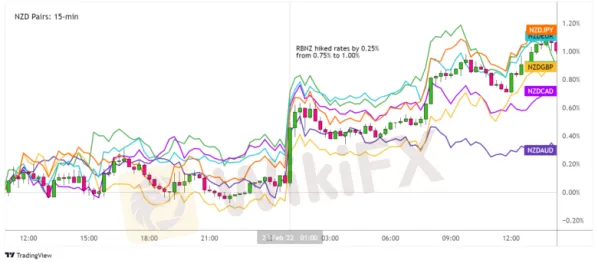
The Kiwi was trading sideways versus its peers before the decision, as seen by the overlay of 15-minute charts above, before surging across the board. The currency was able to maintain (and then some) of its gains, notably versus the dollar, yen, euro, and pound.
What can we anticipate this time?
Borrowing costs are expected to rise by 0.25 percent in anticipation of the RBNZ's imminent announcement, putting interest rates back to pre-pandemic levels.
Keep in mind that their previous comment occurred before Russia invaded Ukraine, so it's reasonable to conclude that the global economic situation has changed dramatically since then. For one thing, prices jumped when oil prices rose due to sanctions and an energy shortage. This is likely to have resulted in greater consumer inflation, putting more pressure on the RBNZ to tighten more forcefully.
As a result, some are banking for a 0.50 percent rise this month, or at the very least stronger indications that another raise is in the works for their next meeting.
In any case, keep a lookout for increased volatility around the announcement; things might become cut-crazy!
There's no shame in waiting on the sidelines and watching the event develop if you're not comfortable placing trades or holding positions open when huge price surges occur.








