

Global Broker Regulation Inquiry App
About WikiFX
English
简体中文
繁體中文
English
Pусский
日本語
ภาษาไทย
Tiếng Việt
Bahasa Indonesia
Español
हिन्दी
Filippiiniläinen
Français
Deutsch
Português
Türkçe
한국어
العربية
اردو
FXTRADING Financial Focus (Asia-Pacific 07/22)U.S.-Canada Trade Tensions Escalate
Abstract:Trade tensions between the United States and Canada have escalated once again. The Trump administration recently announced that it will impose import tariffs of up to 50% on selected Canadian exports
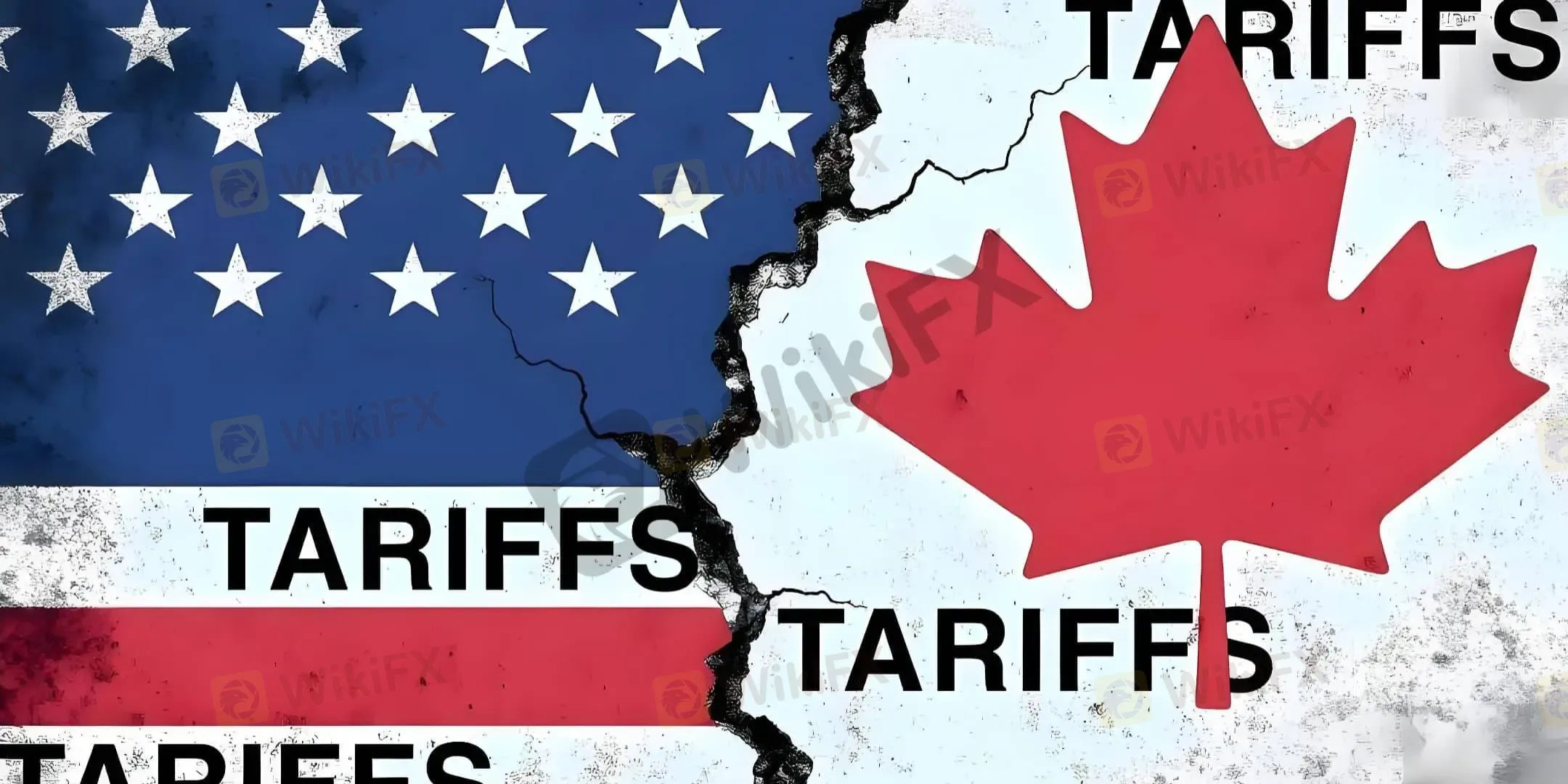
Trade tensions between the United States and Canada have escalated once again. The Trump administration recently announced that it will impose import tariffs of up to 50% on selected Canadian exports under Section 338 of the Tariff Act of 1930, with the measures scheduled to take effect 30 days after the executive order is signed. This marks another large-scale round of U.S. trade restrictions targeting Canada in recent years, with a significantly broader scope than previous measures.
Unlike earlier tariffs that mainly targeted steel, aluminum and softwood lumber, the newly announced duties cover a much wider range of products, including wine, dairy products, cement, furniture, paper, plywood and sporting goods. More notably, the U.S. has revoked the exemptions previously granted to these products under the United States-Mexico-Canada Agreement (USMCA), meaning that even Canadian goods that comply with the agreement's rules will now be subject to the new tariffs.
The United States stated that the latest measures are aimed at addressing Canada's long-standing trade policies. The Trump administration argues that Canada has imposed unfair restrictions on U.S. businesses in sectors such as automobiles, alcoholic beverages and dairy products, and therefore decided to respond through tariff measures. The White House also stressed that the move is purely a trade policy decision and is unrelated to the recent Canadian wildfire smoke that has affected parts of the United States.
Canada moved quickly to respond to the new round of U.S. tariffs. Prime Minister Mark Carney stated that the decision violates the fundamental principles of the USMCA and will further increase the cost of cross-border trade, ultimately harming businesses and consumers in both countries. He warned that the continued escalation of trade barriers would not only push up prices but also weaken the stability of North American supply chains, making it detrimental to the long-term economic interests of both nations.
At the same time, the Canadian government remains committed to resolving the dispute through negotiations. Carney said Canada has spent more than a year studying potential improvements to the USMCA and is preparing for a possible new round of negotiations. He emphasized that Canada is willing to continue engaging with the United States in an effort to narrow differences while safeguarding its national interests and restoring stability to bilateral trade relations.
If the new tariffs take effect as scheduled, Canadian exporters will face significantly higher costs to access the U.S. market, potentially squeezing profit margins for manufacturers, agricultural producers and consumer goods companies that rely heavily on U.S. demand. Meanwhile, U.S. importers and consumers are also unlikely to avoid the impact of rising costs, with prices for some products expected to increase further. For North American supply chains, businesses may be forced to reassess their sourcing, production and investment strategies, adding further uncertainty to regional industrial networks.
From FXTRADING's perspective, the expansion of U.S. tariffs on Canadian goods signals not only a new phase in bilateral trade tensions but also highlights the ongoing uncertainty surrounding North American trade policy. Going forward, market attention will increasingly focus on whether the two countries can ease their differences through negotiations and on the future direction of USMCA reforms. Should both sides continue to adopt confrontational measures, business investment, cross-border trade and supply chain stability could face prolonged challenges, placing broader North American economic cooperation under greater pressure.
(For more insights into global macroeconomic trends and market developments, please follow FXTRADINGs official updates. This information is provided for reference only and does not constitute any form of investment advice.)
Disclaimer:
The views in this article only represent the author's personal views, and do not constitute investment advice on this platform. This platform does not guarantee the accuracy, completeness and timeliness of the information in the article, and will not be liable for any loss caused by the use of or reliance on the information in the article.
WikiFX Broker
Latest News
InstaForex Review 2026: Is This Forex Broker Safe?
 WikiFX
SandStoneFX Review 2026: Is This Forex Broker Safe?
WikiFXFake Investment Scam and Human Trafficking Network Busted with 109 Arrested
WikiFXFacing a 20% Floating Loss: How Beginners Can Prevent a Margin Call
WikiFXForex Traders With Day Jobs: The PERKESO Deadline You Cannot Ignore
WikiFXLOYAL PRIMUS Review: FSCA-Regulated Broker Faces Mounting Withdrawal Complaints
WikiFXGFS Review 2026: Withdrawal Complaints, MT5 Access, and Regulation Gaps
WikiFXHow Trading Costs Quietly Drain Your Account: Spreads, Swaps, and Pip Values
WikiFXWhy MetaTrader 4 Remains the Top Choice for Testing Automated Trading Robots
WikiFXDollar Firms as Geopolitics Pressures Asian Currencies
WikiFX