World Cup Fever Is Here! Choose your broker like you choose your team
Join WikiFX and investors worldwide in celebrating the excitement of the 2026 FIFA World Cup!
Original

简体中文
繁體中文
English
Pусский
日本語
ภาษาไทย
Tiếng Việt
Bahasa Indonesia
Español
हिन्दी
Filippiiniläinen
Français
Deutsch
Português
Türkçe
한국어
العربية
اردو

Abstract:It is almost as if either people never learn from history, or the prior generation did not pass their experience down to the current generation.
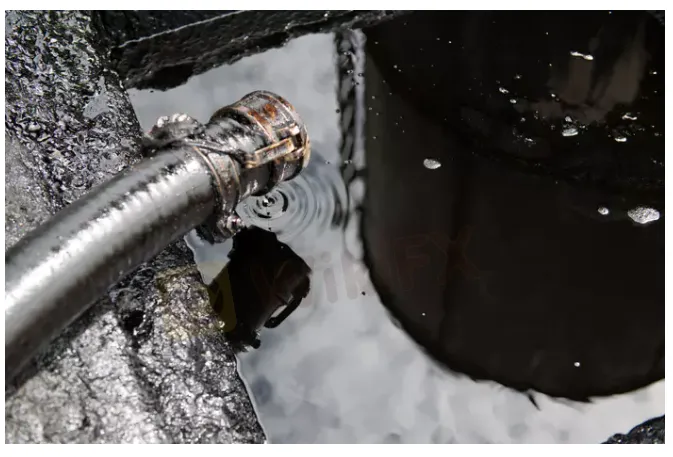
Those who remember the 1970s would be able to testify that unrelated foreign governments poking their paddle into political matters which they do not understand and are occurring thousands of miles from their comfortable offices often end up destroying the lives of their own citizens rather than resolving any turmoils that are none of their business.
The Yom Kippur War in the early 1970s which took place in the Middle East saw the United States take a side, and in doing so, the Arab League nations which at the time supplied the majority of oil to the United States decided to retaliate with a trade embargo.
The result was fuel rationing, very high prices for energy products and a 55mph speed limit.
Today, things are about to get much worse, for a far less severe period of political trouble.
It is now as though the current circumstance is set to break the banks of the populations of the European and American continent, whilst empowering Russia and its allies.
The mass withdrawal of large companies from key global markets has led to supply shortages and logistical issues.
It is important to look at the bear bones of each local economy and its structure. Most Western economies consist of tertiary services, and are net consumers, rather than producers, whereas Russia has a non-diversified, raw materials based economy and is a major supplier of oil and gas to the entire world.
Yesterday, the more astute observers from within the banking and electronic trading sector worked out very clearly that if Russia now sells just 30% of its annual production of natural gas and oil, its energy producing industry, which is the largest in the world, would make 100% of the revenues that it would have done if it had sold 100% of its annual production before all these sanctions were imposed.
In simple terms, that means that Russia can now sell a third of its gas and oil for the price it would have got for all of it.
Whos the real winner here? Not the consumer. Many residents of the UK will soon line up to fill their car with fuel for £250 per tank, or work out how to heat their home without being faced with a bill of £1000 per month. This therefore has created an inflationary market.
Looking at it this way, it is the western nations that have turned on their own people and have been doing so for two years now.
Gas prices in the UK alone have gone from an average 55p per therm to 700p per therm for many domestic households.
Hedge fund manager Crispin Odey, a renowned investor who has mastered volatile markets before, has made a 30% increase in his returns over the past two weeks as a result of the market turmoil.
Mr Odey quite rightly said that the UK is in just the early days of an ‘energy crisis’ and that prices will climb further and plunge the Western world into a deep recession.
This is the next stage in the agenda following the lockdowns of 2020 and 2021.
We all saw the G7 leaders meeting last year in Glasgow all in the name of the ‘climate’, and the ESG roll-out begin among many firms.
Oil and gas are certainly commodities that are in higher use than ever, and in India and China, they are being imported and consumed at a rate so high that the black stuff cannot be refined quickly enough to get it to its customers. In India and China, it is business as usual.
Russian oil giants will simply sell their now very expensive oil to China and India, both of which will continue to manufacture, develop, and operate their enormous economies with gusto.
Oil and gas, therefore, are the commodities to watch. Things that are considered ‘naughty pleasures’ are often highly prized.
Disclaimer:
The views in this article only represent the author's personal views, and do not constitute investment advice on this platform. This platform does not guarantee the accuracy, completeness and timeliness of the information in the article, and will not be liable for any loss caused by the use of or reliance on the information in the article.

Join WikiFX and investors worldwide in celebrating the excitement of the 2026 FIFA World Cup!
Have you experienced issues with Pepperstone deposit & withdrawal processing? From your experience, do you feel that the Australia-based forex broker causes losses to its clients? Did the brokerage entity freeze your account and give you a margin call? All these trading allegations have been rampant on broker review platforms such as WikiFX. This Pepperstone review article takes a close look at the user complaints, especially in 2026. Additionally, we have given an overview of the regulatory framework under which the brokerage entity operates.

Some broker comparisons end with a confident "go with this one." This is not one of them — and that honesty is exactly what makes it worth reading. Wundersys and tradgrip are two young, offshore-registered brokers that keep popping up in front of beginner traders, often through aggressive online marketing. Both promise the usual buffet: tight spreads, generous leverage, multiple account tiers. And both, according to WikiFX, sit near the very bottom of the safety scale. So instead of crowning a champion, this comparison is really about something more useful: learning to read the warning signs, understanding the small differences that still matter, and knowing why "the better of two risky options" is still a conversation about risk.
If you trade forex from India, Pakistan, Bangladesh, Sri Lanka, or Nepal, you already know the quiet truth that eats into every trader's results: it is not just the market that decides whether you profit — it is the cost of getting in and out of each trade. Shave a couple of dollars off your commission on every lot, multiply it across hundreds of trades a year, and you are looking at the difference between a strategy that works and one that bleeds out slowly. South Asian traders are some of the most cost-conscious in the world, and rightly so. So we pulled the data on the brokers most often recommended for the region, cross-checked every name on WikiFX, and ranked them by the one number that matters most here: what they actually charge you to trade. Before the list, one quick lesson that will make this whole ranking click.
 WikiFXWikiFXWikiFXWikiFXWikiFXWikiFXWikiFXWikiFXWikiFXWikiFX
