Abstract:OneRoyal has always emphasized the importance of expertise, professional industry knowledge, and high-quality market analysis to its traders. Today, we sit down with the companys Head of Market Analysis, Mouaz Hosni, to talk about the current trends in the markets, best approaches to market analysis, and what it takes to stay ahead of the competition.
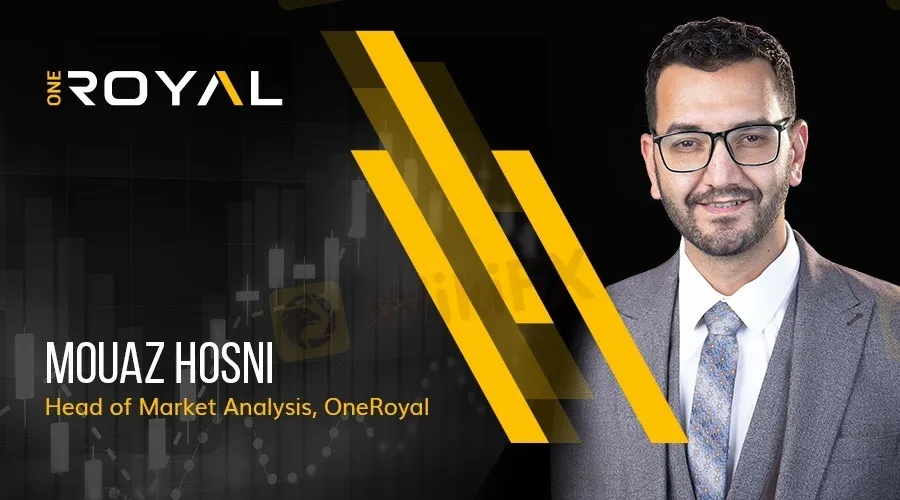
Mouaz Hosni, Head of Market Analysis at OneRoyal, shares his thoughts.
As the Head of Market Analysis for OneRoyal, what do you think is the importance and role of Market Analysis for a broker and its clients?
I believe that our main mission is to give our clients the latest news, updates, and information on the forex market direction. We equip traders with the information they can rely on in their trading decisions.
What do you believe is the most important thing traders need to know?
In my opinion, it is equally important that traders in the forex market know how to manage their capital, risk management, and acknowledge the need to set a stop loss order before setting a take profit order. Also, another important thing is for traders to know the basics of the market and how trading works.
What do you see as the most common traders mistakes?
Greed and fear are always an enemy in the trading world. Some traders, especially beginner traders, show an intense fear of losing. Others are covets over profits.
What do you see as common Market Analysts mistakes in the industry?
Being rigid, in my opinion. An analyst needs to be open and present with whats in front of them. Market behavior can change fast, and it does not always happen according to our expectations. So, being overly focused on one scenario or trend, market analysts may lose sight of the market movements and new, emerging, trends.
There was a huge market volatility and growth of CFD trading volumes in 2020, with the beginning of the pandemic. Now the pandemic is over, and the war in Ukraine and sanctions against Russia are happening. There are different predictions about the world economy. How do you think the markets and industry will develop in 2022?
During the first quarter of 2022, the world witnessed Russia‘s military invasion of Ukraine. During this time, it was gold that had the lion’s share in market movements. Furthermore, recent data coming from America and Europe indicates a remarkable recovery. Personally, I expect that gold and oil will be growing at the expense of the US dollar within the next six months.
What do you see as more interesting trends emerging in the industry now?
The current interests involve gold, indices, and oil. At present, these have high liquidity, mainly because of Russias military invasion of Ukraine, and the sanctions that mainly affect the Russian energy market.
Do you think the uncertainty in the world will give cryptocurrencies another boost?
As I mentioned in previous interviews, cryptocurrencies have a strong market value. Furthermore, the current situation with Russia‘s invasion of Ukraine, as well as Russia considering the use of cryptocurrencies as an alternative to the US dollar for their business deals, will probably boost cryptocurrencies more than usual. That said, it’s worth keeping in mind that the crypto market has come a long way since 2017, and now that institutions have entered the crypto space, it has become more predictable from the traditional market analysts perspective.
Do you see any preferences in trading and market analysis based on your clients regions? Since OneRoyal has presence all over the world (MENA vs other).
Yes, of course. There are big differences between our clients based on where they live. Trading in the Middle East, for example, is very different from Europe‘s and Asia’s trading, and the reasons for these differences may include the volume of liquidity or the traders willingness to trade big positions.
Differences are even evident between the Arab Gulf regions and the rest of the Arab countries. The differences include, of course, the choice of trading instruments, where some countries are more likely to go for gold and indices over currencies, as well as the emotional component of how trading decisions are made.
We certainly see that traders from some markets are driven by emotions more than others.
Here at OneRoyal, we do not differentiate between our traders, irrespective of whether they are from the Arab region, Europe, or Asia. We ensure that all our traders who want to trade in the market, are given the option to go in the direction that they feel matches their personal view of the market.
This is the reason were bringing a wide range of instruments, including cryptos (in markets where they are allowed by regulators), and ETFs.
What is your approach to Market Analysis and providing traders with actionable insights?
When it comes to our traders, we always give them the choice of, either analyzing and trading on the market based on their own viewpoint or, based on our view of the market. The decision of which route to follow is up to the trader. Of course, this approach will only work when combined with proactive education of the traders and employees alike.
This is why we work closely with Sales and Business Development teams to ensure they understand the markets, as well as the OneRoyal platform, and are able to direct the traders to the educational materials and resources we offer.
What exactly are those materials?
We offer a full suite of the Trading Central materials – actionable market insights and indicators. We also put a strong emphasis on generating our own content – daily market updates, available as articles, videos, and webinars in Arabic, and we will be kicking off very ambitious English content production plans in the coming weeks.
What do you think sets OneRoyal apart from competitors?
In terms of our product offering, our traders love our MT4 Accelerator, the set of enhancements to the trading platform that truly redefine their trading experience and add the tools that other brokers simply do not have.
We have also been very crypto-forward, offering crypto as deposit and withdrawal methods long before other brokers did, and also introducing BTC as the base currency, for the jurisdictions where it is compliant to do so.
On a bigger scale, what I would say distinguishes OneRoyal from others is our long-term credibility, transparency, and speed of execution.
In addition to the above, I also believe that our multiple licenses from regulatory institutions, including the ASIC license, are a big asset and strength of ours in that they give traders the confidence in trading with us.
More importantly, the company and its leadership have always put the long-term growth and sustainability of the brand over short-term profits, and in the past 15 years, we have built the company and the product that is here to stay.
When young professionals join your team as Market Analysts, what do you tell them first? What should they know and learn?
Every new beginning has its challenges, but I would say that one of the most important things is to know a little bit of something about everything.
Even though analysts are specialized in different areas, meaning that they might have advanced, professional knowledge in one specific type of analysis, they should still be knowledgeable about the other types of analysis as well.
My advice is to keep acquiring information and knowledge, and stay curious about what‘s going on in the world, in the news, and in the markets that aren’t your primary focus. New information comes up every day, and the analyst should be able to keep processing it, in order to keep learning and growing.
The world is changing ultra-fast these days, and, as the saying goes, it takes all the running you can do, to keep in the same place.