World Cup Fever Is Here! Choose your broker like you choose your team
Join WikiFX and investors worldwide in celebrating the excitement of the 2026 FIFA World Cup!
Original

简体中文
繁體中文
English
Pусский
日本語
ภาษาไทย
Tiếng Việt
Bahasa Indonesia
Español
हिन्दी
Filippiiniläinen
Français
Deutsch
Português
Türkçe
한국어
العربية
اردو

Abstract:The Federal Reserve is expected to raise interest rates by three-quarters of a percentage point for the fourth straight time on Wednesday, but open the door to a future slowdown in its policy tightening as it balances the risk of stubbornly high inflation against the economic strains of tighter credit.
The U.S. central bank will announce its latest policy decision at 2 p.m. EDT (1800 GMT), with Fed Chair Jerome Powell scheduled to elaborate on policymakers' thinking in a news conference half an hour later.
The Fed will not release new quarterly economic projections, leaving Powell to finesse what may be a particularly tricky update about the Federal Open Market Committee's expectations for the economy, inflation and interest rates.
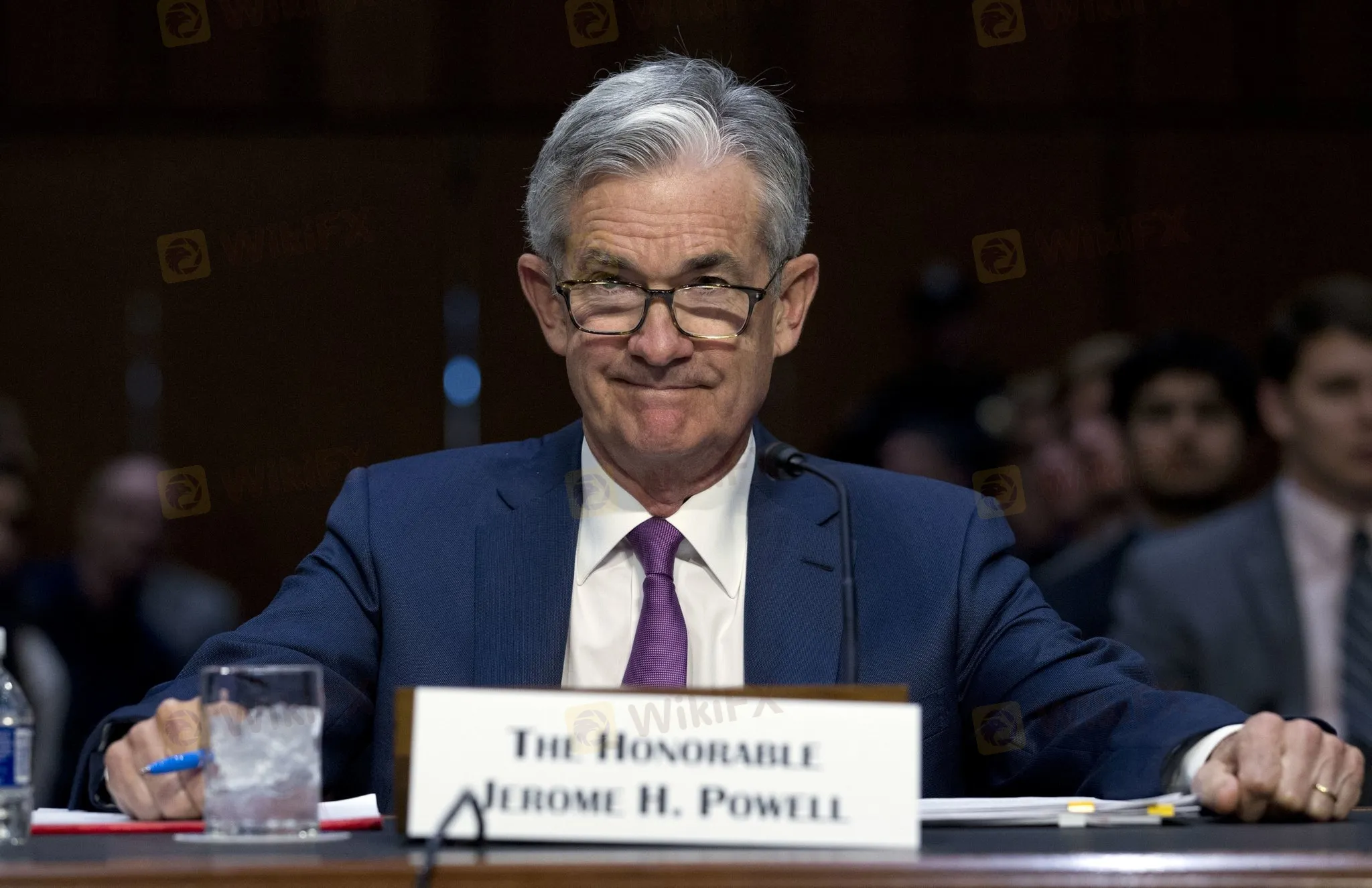
Rising prices are a top-of-mind concern cited in public opinion polls and among investors, and have been a centerpiece of Republican criticism of the Biden administration ahead of next week's congressional elections.
Data since the Fed's Sept. 20-21 policy meeting has given little sense that inflation, which has been running at 40-year highs, is easing in a decisive way. The job market remains strong.
Yet some Fed policymakers have begun to worry more openly that lifting borrowing costs too aggressively could drive the economy into a needless recession, noting that some survey and private data show price pressures beginning to ease.
If Powell does set the stage for smaller rate hikes in the future, it will be with language that tries to avoid any commitment and leans heavily on how the economy and inflation behave in coming weeks.
The release on Tuesday of a report showing an unexpected jump in job openings in September “is another example of data 'not cooperating' with the Fed's desire to slow the pace of rate hikes,” Citi analysts wrote. “Resilient data raises further the risk that any slowdown is paired with hawkish communication that policy rates could rise for longer and to higher terminal rates.”
LITTLE CLARITY
The rate hike the Fed is expected to deliver on Wednesday will move the target federal funds rate 75 basis points higher to a level between 3.75% and 4.00%. The policy rate has not been that high since early 2008, and the pace of the Fed's moves this year - 375 basis points of tightening after the expected move on Wednesday - is unmatched since the far stiffer rate increases former Fed Chair Paul Volcker resorted to in the 1980s.
GRAPHIC - Federal Funds pace of rate hikes

Ahead of the release of Wednesday's policy statement, traders in contracts tied to the federal funds rate were split on whether the Fed would be able to slow the pace of upcoming hikes, or would approve yet another “unusually large” three-quarters-of-a-percentage-point increase at the December meeting.
Data since the September meeting has given the central bank little clarity. Separate reports showed consumer prices rising 8.2% in the 12 months through September, and a different index preferred by the Fed still more than triple the central bank's 2% target.
Yet some surveys and private data have showed price pressures at least on the cusp of easing, a fact that Fed officials may rely on to set the stage for more modest rate hikes to come.
Outside critics, including some members of Congress with oversight of the Fed, have also cautioned against pushing rate hikes too far - with the sharp rise in rates on 30-year fixed mortgages cited as a prime example of central bank policy hitting consumers in a meaningful way.
Disclaimer:
The views in this article only represent the author's personal views, and do not constitute investment advice on this platform. This platform does not guarantee the accuracy, completeness and timeliness of the information in the article, and will not be liable for any loss caused by the use of or reliance on the information in the article.

Join WikiFX and investors worldwide in celebrating the excitement of the 2026 FIFA World Cup!
Have you experienced issues with Pepperstone deposit & withdrawal processing? From your experience, do you feel that the Australia-based forex broker causes losses to its clients? Did the brokerage entity freeze your account and give you a margin call? All these trading allegations have been rampant on broker review platforms such as WikiFX. This Pepperstone review article takes a close look at the user complaints, especially in 2026. Additionally, we have given an overview of the regulatory framework under which the brokerage entity operates.

Some broker comparisons end with a confident "go with this one." This is not one of them — and that honesty is exactly what makes it worth reading. Wundersys and tradgrip are two young, offshore-registered brokers that keep popping up in front of beginner traders, often through aggressive online marketing. Both promise the usual buffet: tight spreads, generous leverage, multiple account tiers. And both, according to WikiFX, sit near the very bottom of the safety scale. So instead of crowning a champion, this comparison is really about something more useful: learning to read the warning signs, understanding the small differences that still matter, and knowing why "the better of two risky options" is still a conversation about risk.
If you trade forex from India, Pakistan, Bangladesh, Sri Lanka, or Nepal, you already know the quiet truth that eats into every trader's results: it is not just the market that decides whether you profit — it is the cost of getting in and out of each trade. Shave a couple of dollars off your commission on every lot, multiply it across hundreds of trades a year, and you are looking at the difference between a strategy that works and one that bleeds out slowly. South Asian traders are some of the most cost-conscious in the world, and rightly so. So we pulled the data on the brokers most often recommended for the region, cross-checked every name on WikiFX, and ranked them by the one number that matters most here: what they actually charge you to trade. Before the list, one quick lesson that will make this whole ranking click.
 WikiFXWikiFXWikiFXWikiFXWikiFXWikiFXWikiFXWikiFXWikiFXWikiFX
