Abstract:The CEO of DBS Digital Exchange (DDEx), the digital asset exchange under DBS Group, expressed that the collapse of LUNA and FTX last year severely shook public confidence in cryptocurrencies. Some users turned to DeFi, but he believes that centralized exchanges will continue to exist in the future.

Last year in May, the Terra-Luna debacle resulted in the evaporation of $40 billion in funds for global investors, plunging the cryptocurrency market into a winter. Shortly after, in November, the bankruptcy of FTX exchange triggered another crisis of trust in centralized cryptocurrency services among the public.
As we approach the one-year anniversary of Terra's collapse and six months after the closure of FTX, Lionel Lim, CEO of DBS Digital Exchange (DDEx), the digital asset exchange under Singapore's largest commercial bank DBS, shared his insights in a contribution to Coindesk.
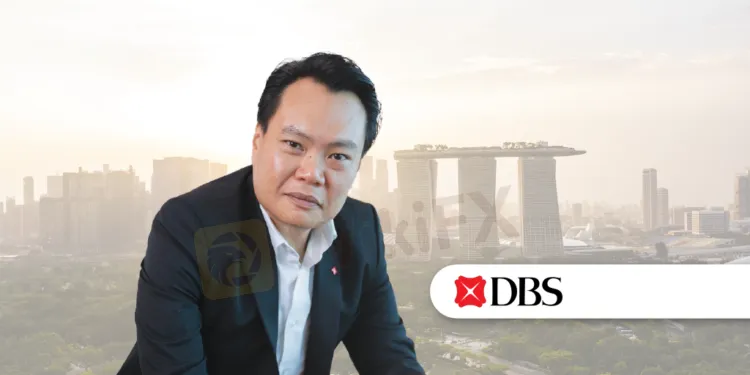
He stated that the two major debacles last year severely shook people's confidence in cryptocurrencies, triggering the most terrifying existential crisis in the industry's 15-year history. As the cryptocurrency market recovers this year, it is now the best time to reflect on last year's setbacks and how the industry can rebuild itself more effectively.
He pointed out that first and foremost, we should acknowledge that these debacles were not failures of blockchain technology itself, but rather the result of poor risk management and corporate governance, with some failed companies engaging in fraudulent activities. The market continues to recognize the integrity and innovative potential of blockchain. The influx of significant funds into decentralized exchanges after FTX's collapse and the positive response to the transition of Ethereum to Proof-of-Stake (PoS) and the Shanghai upgrade to Shapella demonstrate this.
CEX (centralized exchanges) will continue to exist.
However, despite the shift towards DeFi by many users, centralized exchanges (CEX) will continue to exert significant influence, especially as their maturity and institutional adoption rates increase. CEX remains the dominant platform for trading.
According to data from DefiLlama as of mid-May 2023, CEX accounts for nearly 90% of the total trading volume, encompassing both CEX and decentralized exchanges (DEX). This indicates that despite the waning investor confidence last year, the outlook for CEX remains promising.
CEX integrates solutions for cryptocurrency custody, trading, investment products, consulting, and fiat on-ramps/off-ramps into a single platform, significantly reducing the technical complexities of holding and managing native tokens across different blockchains. Security and protection are also major advantages offered by CEX. According to Chainalysis data, in 2022, 18% of all stolen cryptocurrencies came from CEX, while the remaining 82% were from decentralized services.
Although CEX still has room to improve in terms of protecting customers from network disruptions, they are relatively more secure.
As the industry strives to regain trust and enhance its network security systems, the security gap between CEX and decentralized applications should continue to widen.
Rebuilding trust through asset segregation.
At the same time, he emphasized that in order to regain user confidence, CEX needs to address the demand for better investor protection, risk control, and sound governance structures.
One area that needs improvement is the “segregation of customer and company assets.” After all, regulatory scrutiny surrounding this aspect is greater now than ever before. Policymakers such as the US Treasury Secretary Yellen believe that “asset segregation is a critical area to be addressed in future regulatory frameworks,” largely in response to the mishandling of funds seen in the case of FTX.
In fact, even before the collapse of FTX, the Monetary Authority of Singapore (MAS) had already proposed new regulations in a consultation paper issued in October 2022, requiring cryptocurrency platforms to separate their assets from customer assets. MAS also sought industry feedback on whether cryptocurrency platforms should appoint independent custodians to safeguard client funds.
Lionel Lim suggests that CEX should reconsider the notion of being a “one-stop-shop” service.
While having a seamless front-end user interface between custody and trading makes sense, on the back-end, investors' assets should be held separately by external and qualified custodians, such as banks or registered broker-dealers.
CEX should seek and publish independent attestations from auditors to verify that assets are indeed segregated and that robust risk and governance requirements are in place.
Lionel emphasizes that a series of collapses in 2022 has highlighted the need for investor protection, transparency, robust governance structures, and delivering value to customers for the industry to move forward. CEX that embrace these values will have a competitive advantage at the forefront of exchange establishment and operations.