Abstract:Crude oil recovered some losses after Washington raised the government's debt ceiling, despite Russia's stance against OPEC+ production changes. However, US Federal Reserve interest rate hikes could cap growth. Meanwhile, natural gas prices showed slight recovery, influenced by milder US weather and recovering Canadian exports.

Crude oil managed to regain some stability following last week's losses, with the market reacting positively to a recent debt ceiling increase in Washington, averting a potential government default. However, the energy commodity faces uncertainty due to Russia's position on OPEC+ production and looming changes to US Federal Reserve interest rates.
An Unaffected Oil Market Despite OPEC+ Stance
Despite remarks from Russia's Deputy Prime Minister Alexander Novak stating the unlikelihood of OPEC+ implementing further changes to production levels at the upcoming June 4 meeting, crude oil sustained its recovery. This came following a stern warning from Saudi Energy Minister Prince Abdulaziz bin Salman cautioning speculators to 'brace themselves' for impact, indicating potential output cuts.
Crude Oil Monthly Chart

Nevertheless, this ongoing recovery in crude oil prices could be limited due to forthcoming adjustments to the US Federal Reserve interest rates and concerns about uneven demand recovery in China, post-Covid. The current market anticipates a 60% probability of a 25-basis-point hike in the Fed rate on June 14, a significant increase from the 17% chance predicted just a week ago. Furthermore, the market does not foresee any rate cuts until the year concludes.
Technical Chart Analysis: Crude Oil Treads Carefully
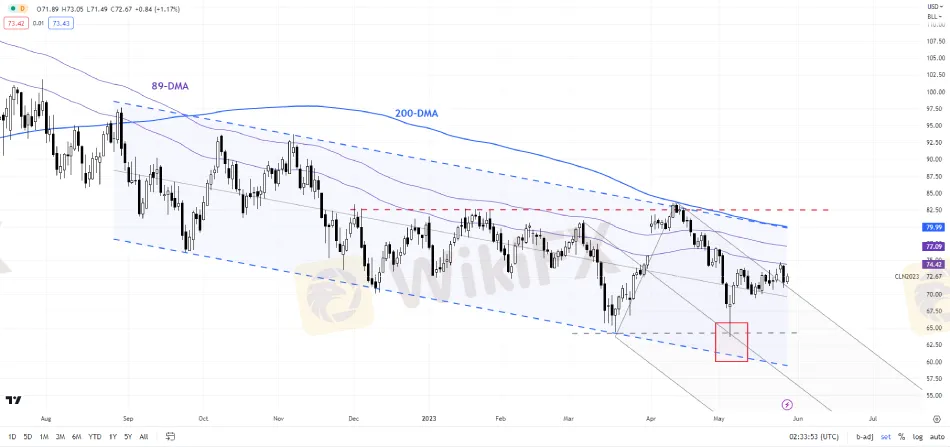
From a technical standpoint, crude oil's ability to maintain above 64.00 may suggest that the commodity may have bottomed out after several months of decline. Yet, there are no immediate indications of a reversal in the downward trend. For any diminishing downward pressure, the oil needs to surpass the April high of 83.50. Until this level is breached, the path of least resistance appears to be neutral to bearish.
Crude Oil Daily Chart
Natural Gas: A Slight Recovery Amid Export Rebounds
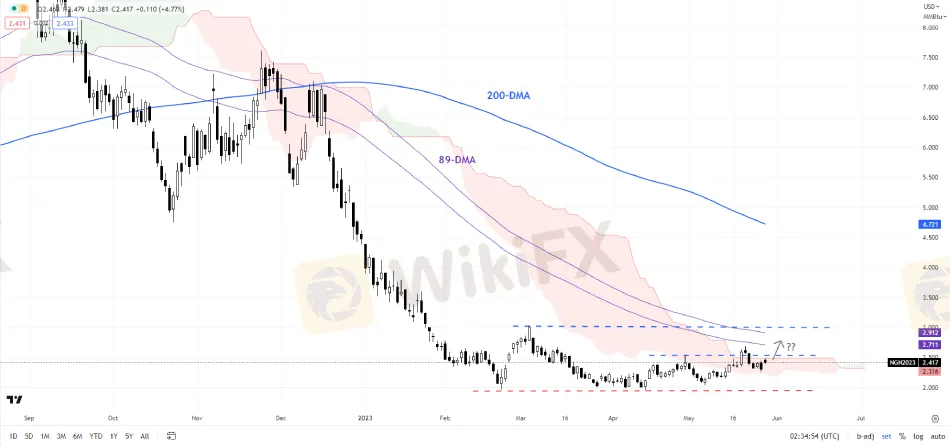
Natural gas prices, on the other hand, took a hit on Friday, only to recover a fraction on Monday morning in Asia. This downward trend can be attributed to the milder weather conditions in the US and a bounce back in Canadian natural gas exports to the US.
Natural Gas Daily Chart
Weather Conditions and Canadian Exports Impact Natural Gas
Forecasts suggest that the weather across the Lower 48 states is expected to transition from cooler-than-average conditions from May 26-29 to mostly normal conditions from May 30 - June 10. This change in weather is expected to affect natural gas demand.
Earlier in May, wildfires compelled Canadian producers to decrease their natural gas exports to the US. However, it appears that the exports are gradually returning to the levels observed before the fires last week, influencing the prices of natural gas.
Natural Gas Monthly Chart

In conclusion, both crude oil and natural gas markets are displaying resilience in the face of numerous challenges. The oil market's response to potential production changes, interest rate hikes, and uneven demand recovery are significant factors to watch. Similarly, the natural gas market will need to navigate the changing weather conditions and fluctuating export levels.
Ensure you're up to date with the latest news by downloading and installing the WikiFX App on your mobile device. You can download the App from this link: https://social1.onelink.me/QgET/px2b7i8n.