Abstract:On Tuesday, the ringgit dipped to a low of 4.7900 against the US dollar, driven by apprehensive investors seeking refuge in the safe haven currency amidst escalating geopolitical tensions. Over the past week, the local currency has depreciated by nearly 0.9% against the US dollar, marking its weakest performance since January 1998. In conjunction with this decline, Bank Negara Malaysia has reiterated its commitment to bolstering the ringgit.
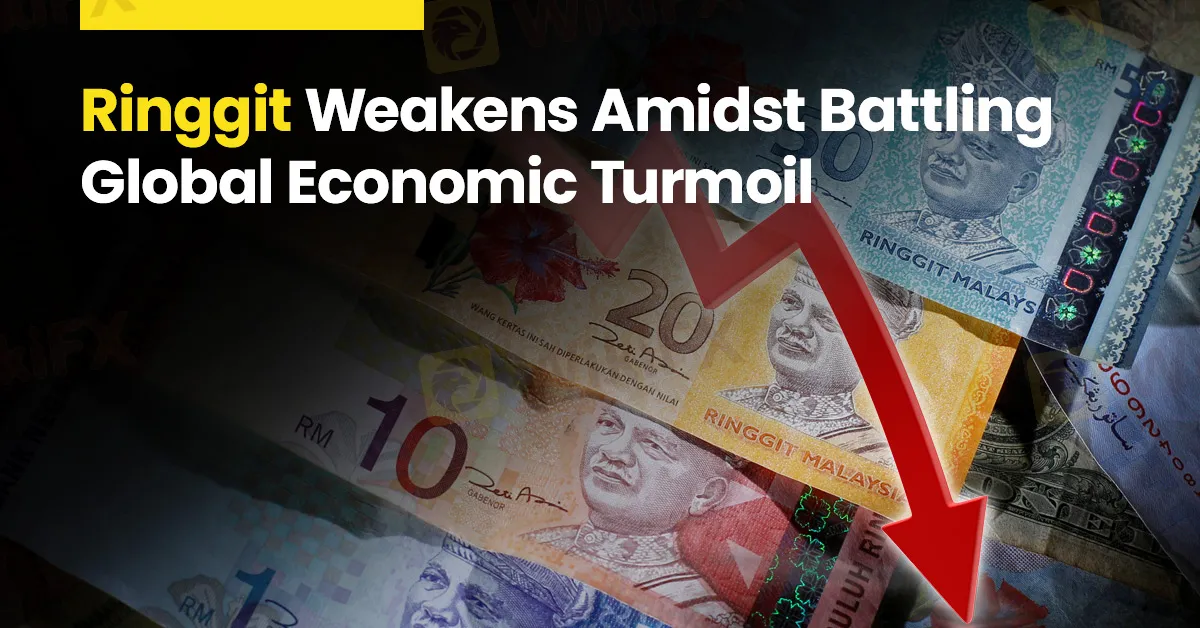
Bank Negara Malaysia has reiterated its commitment to bolstering the ringgit, which has neared its lowest point since January 1998. The central bank pledges to maintain the smooth operation of the foreign exchange market, with assistance from government-linked entities, corporations, and exporters. Their collective efforts aim to attract inflows and enhance liquidity within the market, as stated in a release from the central bank on Monday.
On Tuesday, the ringgit dipped to a low of 4.7900 against the US dollar, driven by apprehensive investors seeking refuge in the safe haven currency amidst escalating geopolitical tensions. Over the past week, the local currency has depreciated by nearly 0.9% against the US dollar.

This scenario is not unique to Malaysia. Investors are closely monitoring emerging-market central banks, including those of China, Korea, Thailand, Poland, and Indonesia, for potential intervention, as their local currencies have been battered by the recent surge in the dollar. In comparison, the ringgit demonstrated relative resilience compared to other regional currencies like the South Korean won, Philippine peso, and Taiwanese dollar.
Malaysia's currency struggles are part of a broader trend influenced by the dollar's strength, fuelled by expectations of prolonged high interest rates by the Federal Reserve, along with safe-haven demand amid escalating tensions in the Middle East. Additionally, the subdued economic prospects for China, Malaysia's key trading partner, have exerted downward pressure on the ringgit.
In early March, Bank Negara Malaysia's announcement to encourage state-linked entities to repatriate foreign investment income and consistently convert it into the local currency helped the ringgit recover from its February lows.
Dr. Mohd Afzanizam Abdul Rashid, Chief Economist and Head of Social Finance at Bank Muamalat Malaysia Bhd, highlighted to Business Times that during times of economic uncertainty, the US dollar typically serves as a safe haven, leading forex traders to increase their allocations to it. He further elaborated that the US Federal Reserve's cautious approach towards reducing its benchmark interest rate is supported by recent economic data, such as the 0.7% month-on-month growth in Retail Sales, surpassing consensus estimates of 0.4%.
Despite these challenges, Malaysia's status as a net oil exporter could offer some relief. With Brent oil prices approaching $100 per barrel, there is still a possibility of support for the Malaysian currency from this front.