Abstract:Paul Atkins, Trumps SEC chair pick, aims to reform crypto regulation, boost IPOs, and enhance market predictability with a new crypto task force.
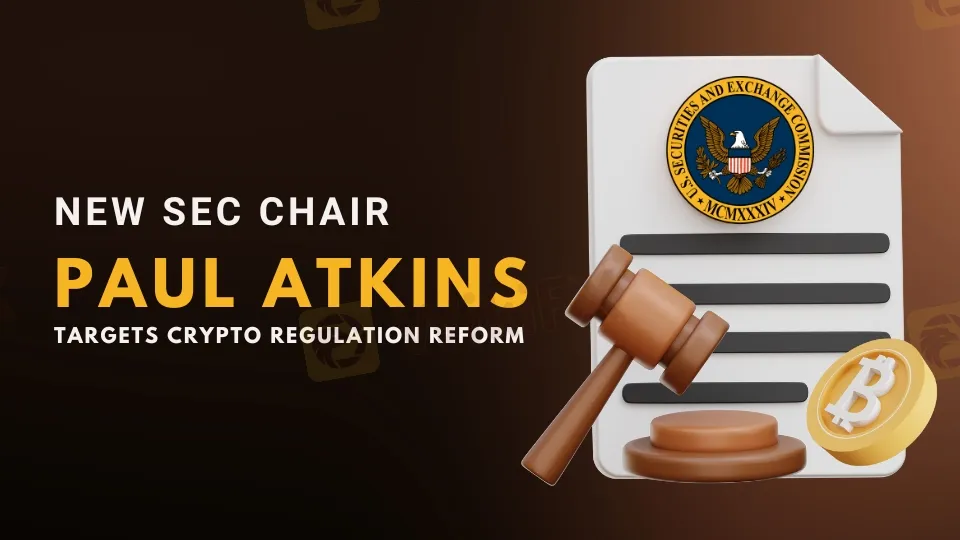
President Donald Trump's appointment of Paul Atkins as the new chair of the Securities and Exchange Commission marks a positive trend toward stabilizing U.S. financial markets. Atkins takes on a major position, charged with removing previous chair Gary Gensler's messy regulatory legacy while addressing important concerns such as global competitiveness, the rise of initial public offers (IPOs), and the critical need for a unified crypto regulatory framework. This selection represents a return to reliable, industry-friendly monitoring, which financial professionals and investors have long sought.
During Gensler's tenure, the SEC used an aggressive approach known as “regulation by enforcement,” leaving businesses, including Bitcoin, in the lurch. According to the Committee on Capital Markets Regulation, Gensler's staff implemented 34 significant rules, a 36% increase from his three predecessors' average. However, this surge of activity lacked coherence, particularly in crypto markets. Instead of proactive recommendations, the SEC relied on lawsuits to establish precedents, a reactive strategy that muddy the waters for both firms and investors. As the agency acknowledged in January, when announcing a new crypto task force under acting chair Mark Uyeda and led by Commissioner Hester Peirce, “to date, the SEC has relied primarily on enforcement actions to regulate crypto retroactively and reactively, often adopting novel and untested legal interpretations along the way.”
This regulatory uncertainty has had a concrete impact. Faced with an unclear climate, several bitcoin exchanges migrated overseas, losing the United States a thriving sector and eroding its worldwide financial edge. Atkins now has a unique chance to change this trend by implementing a reasonable crypto regulatory framework that encourages innovation and protects investors. The newly constituted crypto task group is already moving in the right way, ready to answer long-standing problems and offer stability to this volatile industry.

The growing market for cryptocurrency exchange-traded funds (ETFs) is an immediate priority for crypto regulatory reform. After years of delays, the SEC approved these products last year, and they have since skyrocketed in popularity, with Bitcoin ETFs alone gathering more than $100 billion in assets. However, inefficiencies exist owing to antiquated rules. Broker-dealers, such as my business, help with ETF development and redemption, which is based on hedging with underlying assets for traditional ETFs. However, we are unable to directly handle the digital currencies tracked by crypto ETFs, requiring us to rely on less efficient replacements. It's similar to a chef experimenting with low-quality ingredients: the end result is more expensive, less efficient, and falls short of its potential. Clear SEC advice enabling broker-dealers access to spot crypto markets might result in more efficient operations and better pricing for investors.
Beyond ETFs, financing for crypto governance needs attention. Historically, the SEC's crypto crackdown has been funded by “Section 31” fees, which are levied on regular securities market participants under the Securities Exchange Act of 1934. This implies that even investors who are disinterested in cryptocurrency have had to foot the tab for its regulation, a distressing injustice. Formalizing crypto regulation might alleviate this burden, allowing the crypto industry to bear its own supervisory expenses while relieving pressure on existing markets.
Atkins' mandate goes beyond crypto regulation. It is equally important to revive IPOs, which have stalled due to regulatory overreach, as well as to offset competition from international markets. As I stated in my testimony before the House Committee on Financial Services last year, the US equities market remains a worldwide standard. But keeping that rank necessitates adaptation. Gensler's heavy-handed style risked squandering this advantage; Atkins' leadership presented an opportunity to restore balance.
The formation of the crypto task force reflects a larger intention to return to the SEC's roots: deliberate, data-driven rulemaking that takes into account industry perspectives. This adjustment should reassure financial stakeholders, from Wall Street businesses to individual investors. Atkins inherits a heavy workload—crypto regulatory reform, market efficiency, and global competitiveness—but early indications show he is poised to drive the agency toward a more collaborative and predictable future.
With international rivals circling and new areas such as cryptocurrencies at a crossroads, the Trump administration's SEC selection could not come at a better time. Atkins' track record and the task force's aggressive approach suggest a regulatory reset that favors transparency and development. If successful, this new chapter might cement the United States' position as the world's financial leader while also realizing the full potential of both existing and new markets.