Axi Says 46% of Clients Now Hold Crypto Exposure
Axi says 46% of its clients now hold crypto exposure across spot ownership, CFDs, and perpetual contracts, as brokers continue adding more crypto access options.
简体中文
繁體中文
English
Pусский
日本語
ภาษาไทย
Tiếng Việt
Bahasa Indonesia
Español
हिन्दी
Filippiiniläinen
Français
Deutsch
Português
Türkçe
한국어
العربية
Abstract:Crypto.com’s controversial decision to re-issue 70 billion CRO tokens sparks outrage, raising concerns about vote manipulation and decentralization.
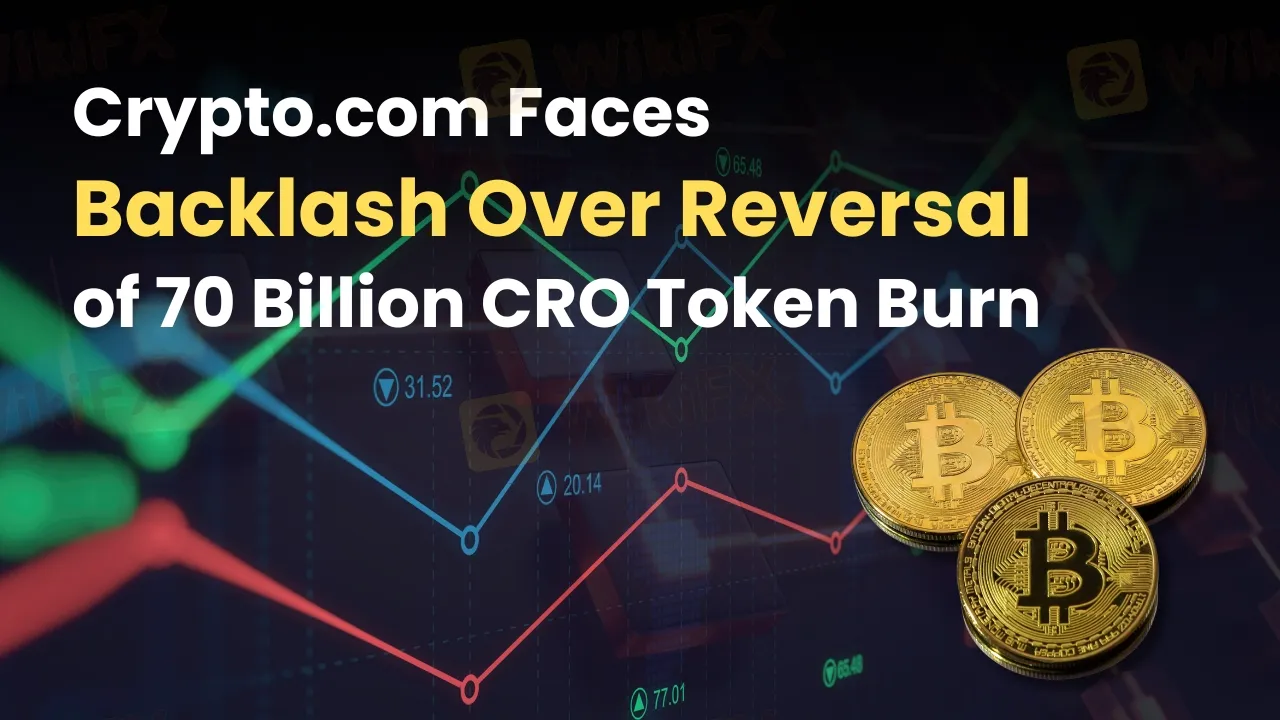
Crypto.com finds itself in hot water as a divisive vote has undone a massive 70 billion CRO token burn on its Cronos blockchain, leaving the crypto community reeling. What was once celebrated as a bold step toward decentralization in 2021 has now morphed into a lightning rod for criticism, with accusations of vote manipulation swirling around the company.
The saga began when Crypto.com CEO Kris Marszalek stepped in to reassure users about the company‘s financial health amid the uproar. The decision to re-issue 70 billion CRO tokens effectively scraps a historic burn that saw 59.6 billion tokens torched instantly in 2021, dubbed “the largest token burn in history.” That move was meant to slash supply and bolster the network’s value ahead of the CRO mainnet launch. The remaining tokens were earmarked for rewards and growth—until now.

On March 2, Crypto.com unveiled its Cronos Strategic Reserve proposal, a $5 billion plan at CRO‘s current $0.08 price tag. The re-issued tokens will land in an escrow wallet, pushing the total supply back to 100 billion CRO. The goal? To fuel U.S. crypto dominance, ecosystem expansion, and even a CRO exchange-traded fund (ETF). But the community isn’t buying it. Many argue the company couldve used its profits to repurchase tokens from the market, rewarding loyal supporters instead of flooding the supply.
The 2021 burn had been a triumph, catapulting CRO‘s price from $0.06 to $0.25 as scarcity kicked in. Now, reversing it feels like a gut punch to those who believed in the vision. Critics say it dilutes value and erodes trust, with some pointing fingers at Crypto.com for allegedly controlling 70%–80% of the voting power. If true, the vote’s passage—despite widespread dissent—feels less like democracy and more like a done deal.
The backlash has been fierce. Social media is ablaze with users decrying the move as a betrayal of decentralization ideals. They question why a company pushing for a decentralized future would cling so tightly to centralized control. The passed vote has only deepened suspicions, with many calling it a sham masked as community input.
In response, Crypto.com has scheduled an AMA event for March 25, where the token burn fiasco will likely take center stage. Marszalek and his team will have to face the music and explain why they chose this path over one that might‘ve kept the community’s faith intact. For now, the reversal stands as a stark reminder: in crypto, trust is hard-won and easily lost.


Disclaimer:
The views in this article only represent the author's personal views, and do not constitute investment advice on this platform. This platform does not guarantee the accuracy, completeness and timeliness of the information in the article, and will not be liable for any loss caused by the use of or reliance on the information in the article.

Axi says 46% of its clients now hold crypto exposure across spot ownership, CFDs, and perpetual contracts, as brokers continue adding more crypto access options.

Have you made profitable trades on the OANDA platform but failed to withdraw anything? Have you been subject to manipulations in stop-loss and other trade orders? Did the United States-based forex broker delay both your deposits and withdrawals? In between, did the customer support service fail to resolve your queries? You are not alone! Several traders have reported these incidents on broker review platforms such as WikiFX. In this OANDA review article, we have examined these allegations for you to glance at. Read on!

XPO, a Belize-based multi-asset broker, has been in the news lately for the wrong reasons. These include the infamous allegations from 450K people towards the end of 2025 in India. The collective siphoned amount goes up to $420 million. According to news reports, the trading platform is still active, making it extremely important for traders to adopt extreme caution. The reviews shared by the users on WikiFX are not encouraging either. We have covered the perils associated with this brokerage entity holistically in this XPO review article. We will approach by outlining the company details before sharing the user allegations. Let’s begin!

When looking for a broker, you need to ask one important question: Will my capital be safe? For Trader's Way, this question comes up on many forums and review websites. A quick search shows mixed results - some people praise it highly, while others make serious accusations. This makes it hard to know what's true. Is Trader's Way a real trading platform or a risky choice you should avoid? This article will give you clear answers. We won't give you a basic review. Instead, we'll look carefully at real data that matters for keeping your capital safe. Our research focuses on two main areas: whether the broker follows proper rules and what real users consistently say about it. We'll use information from WikiFX, a global platform that checks broker regulations. WikiFX gives Trader's Way a very low score - a major warning sign that starts our investigation.