Abstract:When selecting a broker, understanding its regulatory standing is an important part of assessing overall reliability. For traders seeking to protect their capital, ensuring that a platform operates under recognised and stringent oversight can make all the difference. Keep reading to learn more about Capital.com and its licenses.
In the competitive world of online trading, Capital.com stands out as a well-regulated and trusted broker. It holds five active licences from major financial authorities around the world. These licences show that the company is serious about following the rules and protecting its clients.
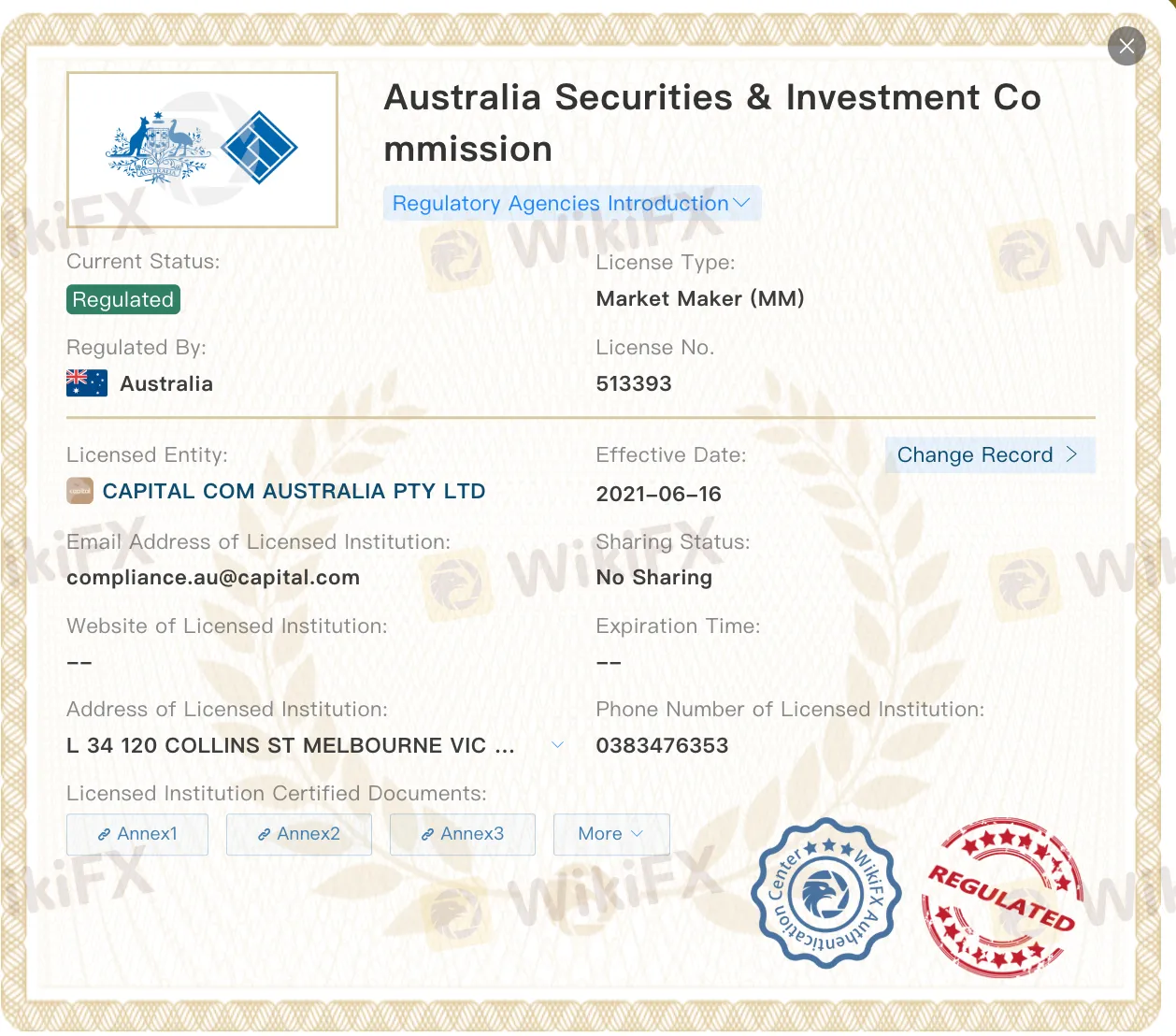
One of the strongest signs of Capital.com's reliability is its licence from the Australian Securities and Investments Commission (ASIC). Under licence number 513393, the company operates as a Market Maker, which means it can set its own prices for buying and selling financial products. ASIC is known for being one of the toughest financial regulators, making sure that companies treat clients fairly and handle money properly.
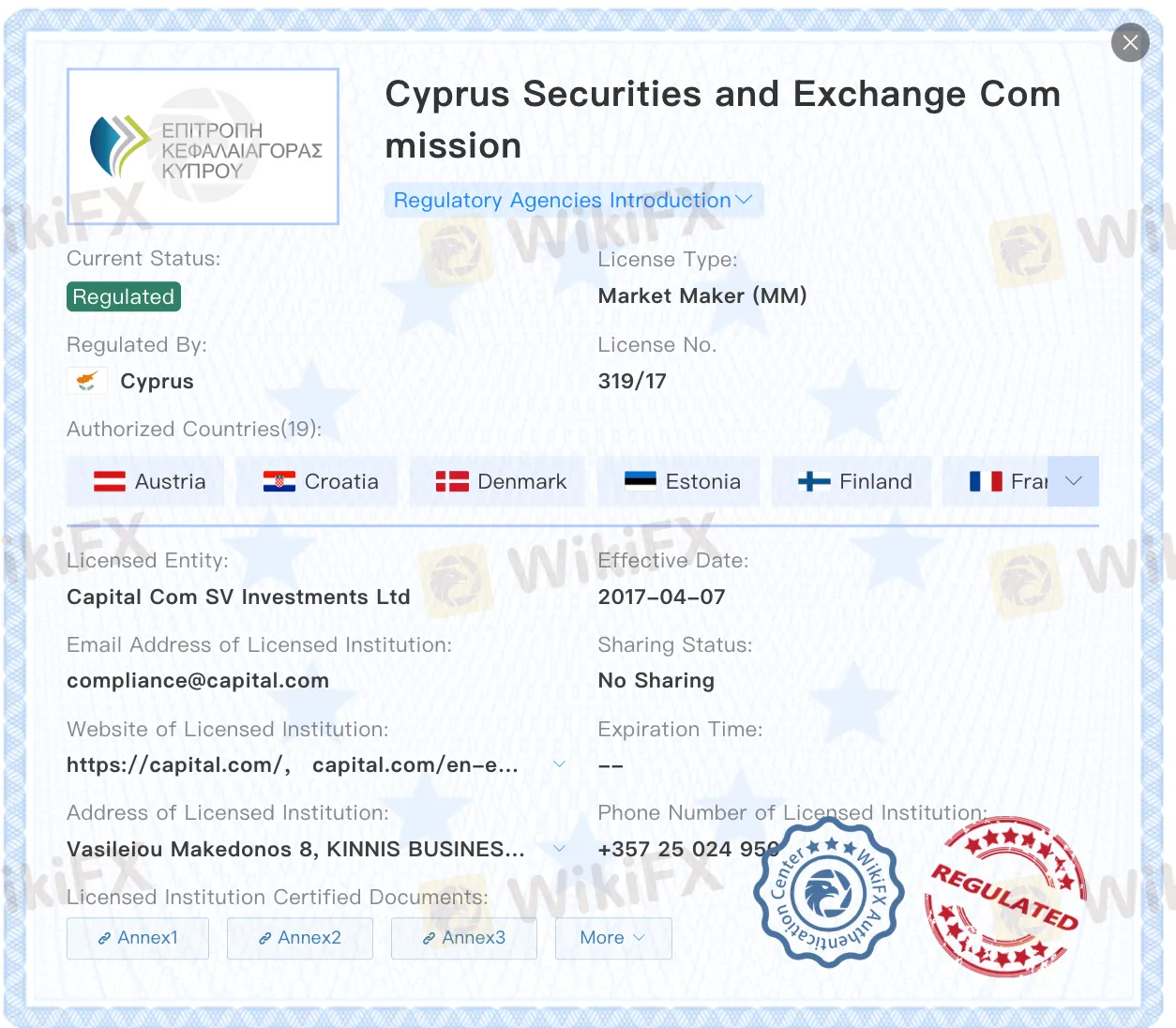
Capital.com is also approved by the Cyprus Securities and Exchange Commission (CySEC), with licence number 319/17. This licence allows the company to operate in the European Economic Area. CySEC follows the MiFID II rules, which are designed to protect traders and make financial markets more open and fair.
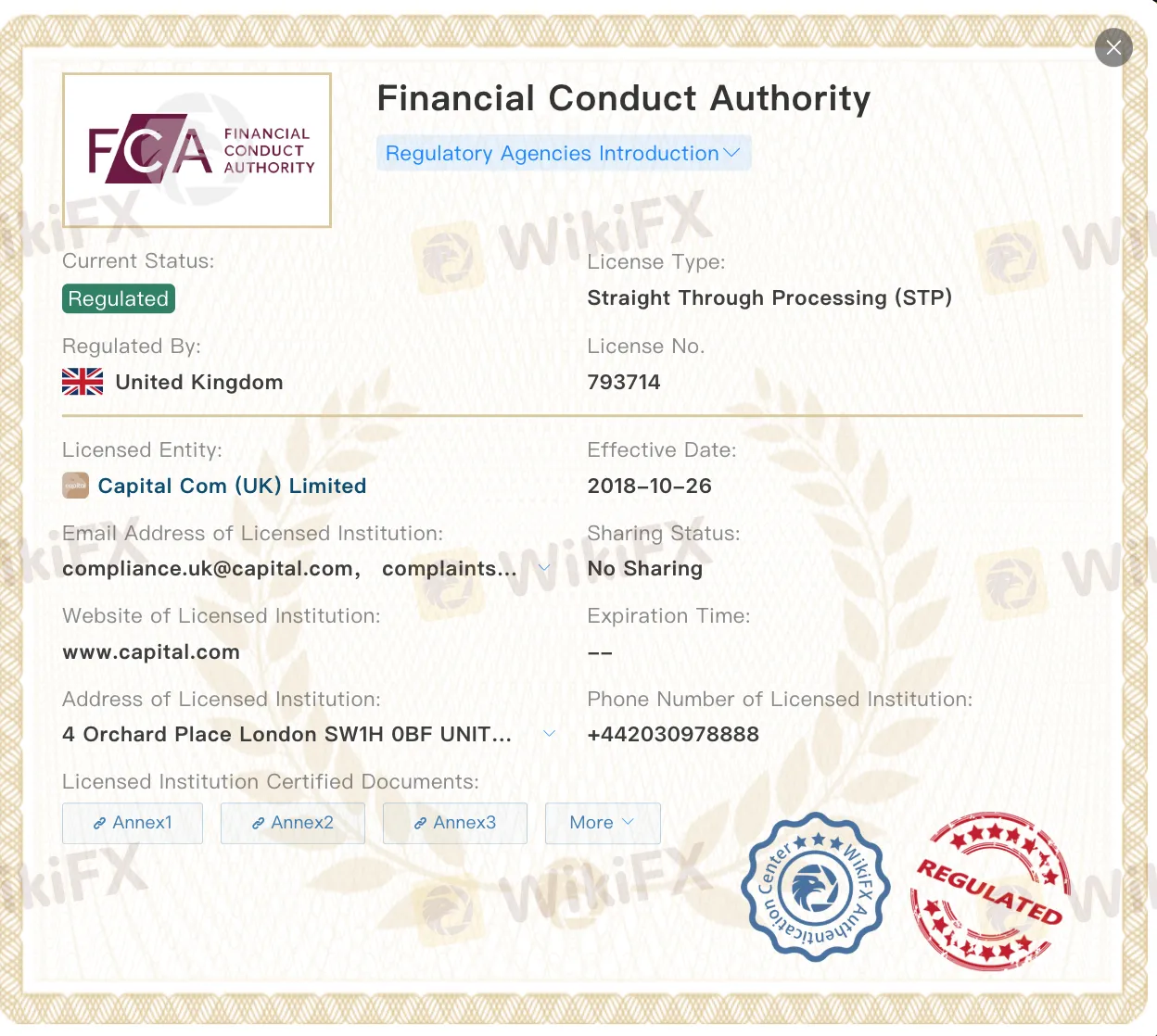
In the United Kingdom, Capital.com holds a licence from the Financial Conduct Authority (FCA), number 793714. It works there using a Straight Through Processing (STP) model. This means that trades go directly to the market without the broker interfering. The FCA is one of the most respected regulators in the world, focusing on clear rules, strong financial checks, and the safety of client funds.
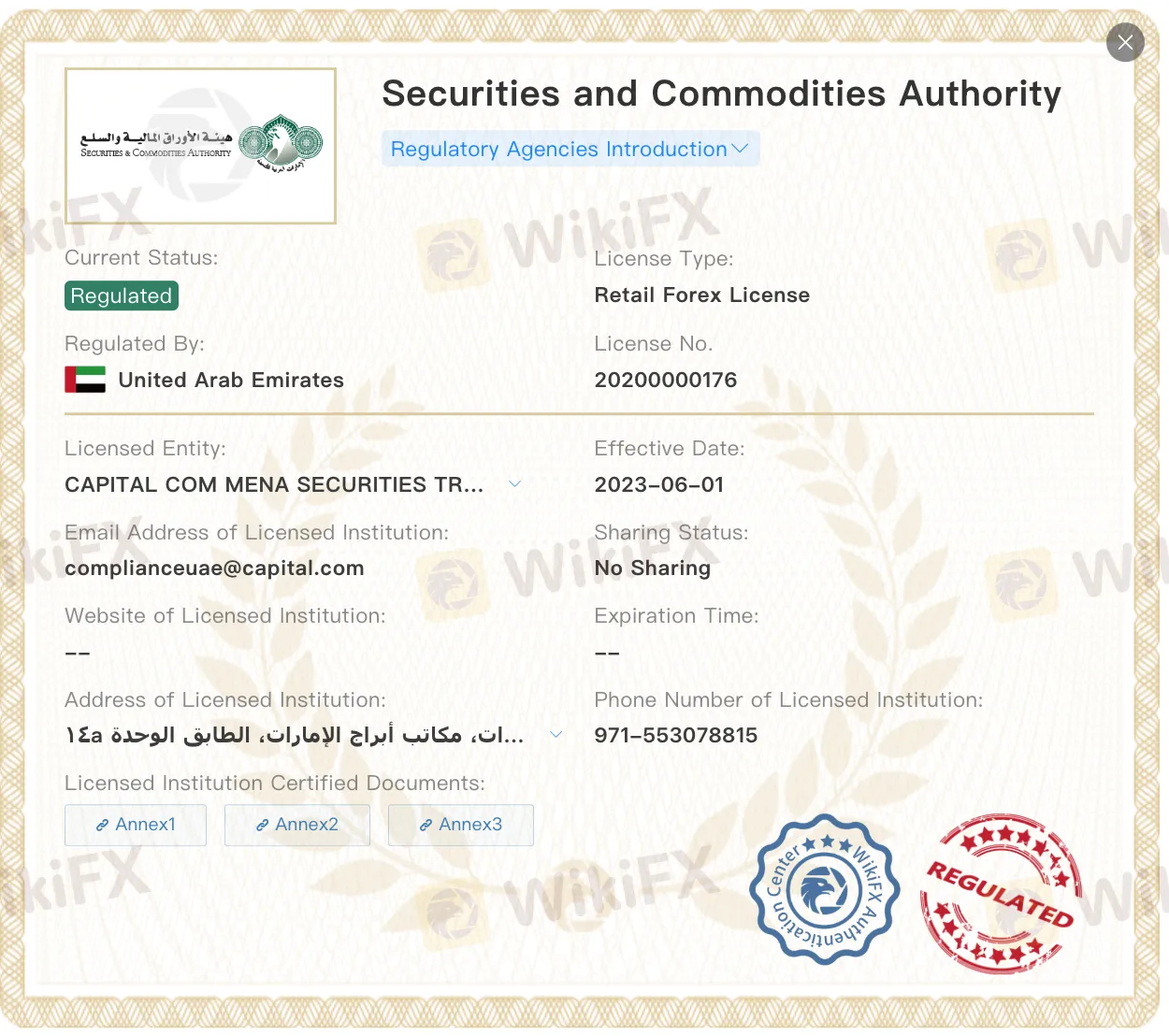
Capital.com has also moved into the Middle East. It is licensed by the Securities and Commodities Authority (SCA) in the United Arab Emirates, under licence 20200000176. The SCA ensures that financial companies operating in the UAE are transparent and follow international standards.
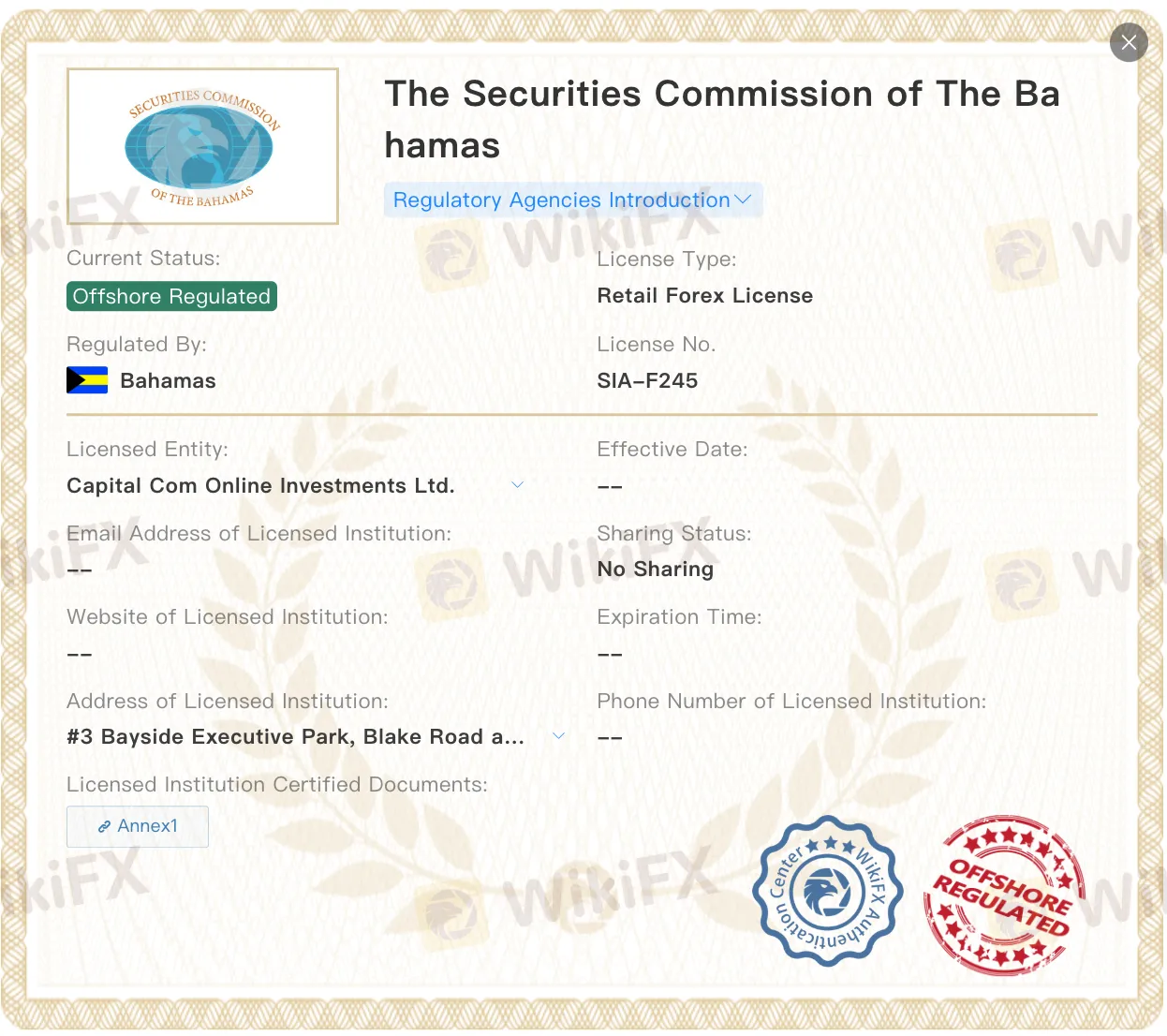
The companys fifth licence is from the Securities Commission of The Bahamas, with registration number SIA-F245. While the Bahamas has a reputation for being an offshore centre, its financial laws have improved in recent years. The country now has stronger rules for preventing money laundering and protecting investors.
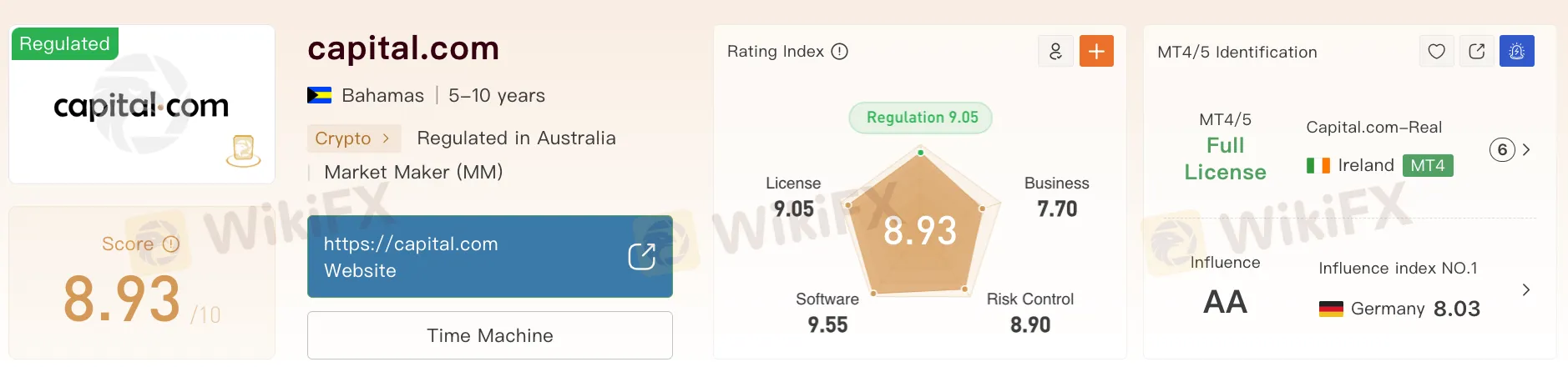
Capital.com's diverse regulatory footprint not only reflects its global ambition but also demonstrates its willingness to submit to scrutiny across multiple jurisdictions. This commitment to transparency is underscored by its WikiScore of 8.93/10 on WikiFX, a broker vetting platform that evaluates firms on licensing, software reliability, risk controls, and operational structure.
With regulation in Europe, Australia, the UK, the UAE, and the Caribbean, Capital.com gives traders access to well-supervised financial markets. For anyone looking for a secure trading platform that follows global rules, Capital.com is a strong choice in todays fast-moving financial world.