

Global Broker Regulation Inquiry App
About WikiFX
English
简体中文
繁體中文
English
Pусский
日本語
ภาษาไทย
Tiếng Việt
Bahasa Indonesia
Español
हिन्दी
Filippiiniläinen
Français
Deutsch
Português
Türkçe
한국어
العربية
اردو


US Q3 GDP Hits 4.3%: Trump Demands Fed Cuts Despite "Red Hot" Economy

WikiFX
|


Abstract:The US economy defied slowdown fears with a blistering 4.3% annualized growth in the third quarter of 2025, shattering market expectations of 3.3%. However, the strong print has paradoxically intensified the political battle over monetary policy, with President Trump doubling down on demands for rate cuts regardless of economic heat.
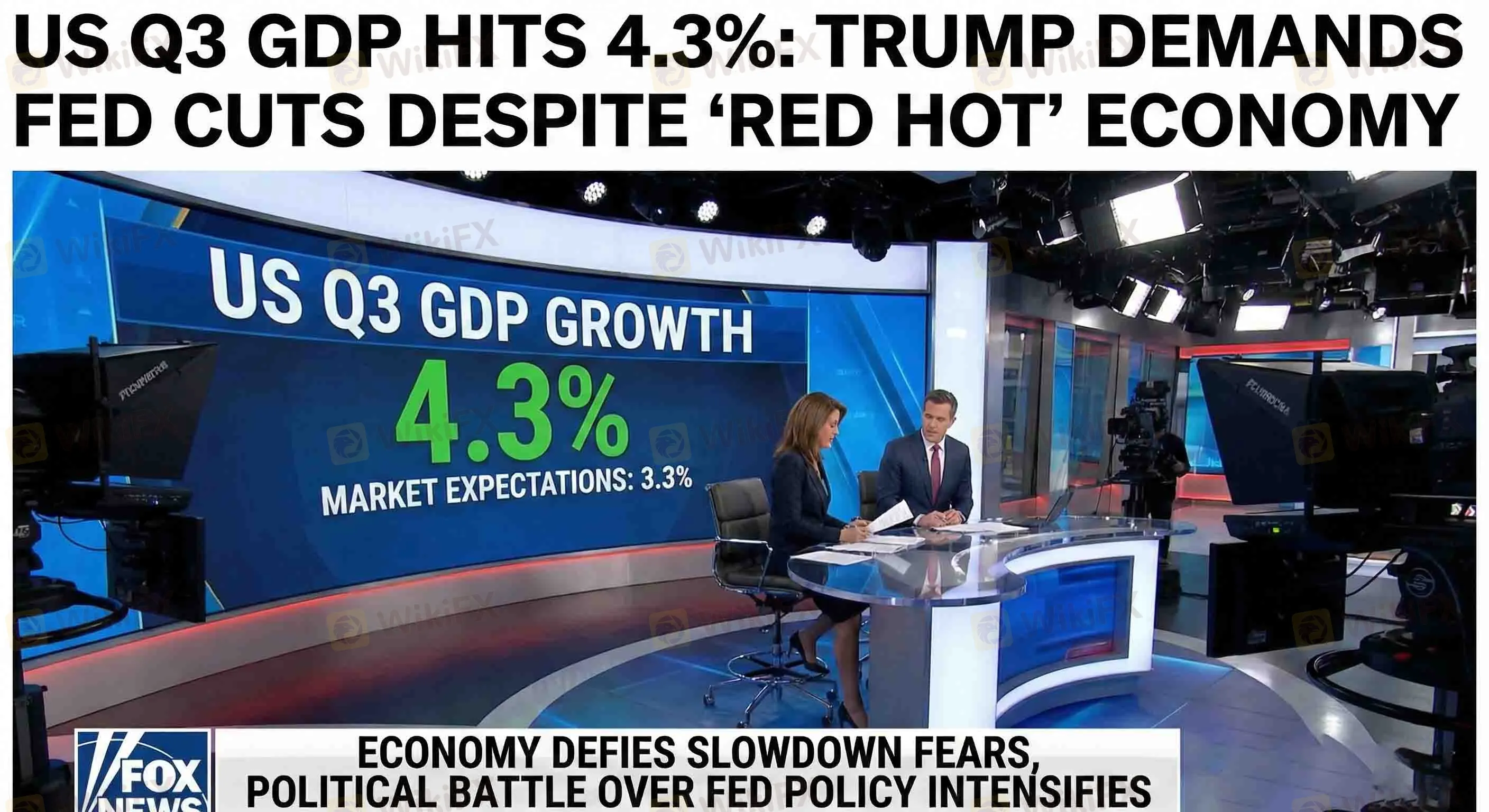
The US economy defied slowdown fears with a blistering 4.3% annualized growth in the third quarter of 2025, shattering market expectations of 3.3%. However, the strong print has paradoxically intensified the political battle over monetary policy, with President Trump doubling down on demands for rate cuts regardless of economic heat.
The “Loyalty Test” for the Next Fed Chair
In a direct challenge to central bank orthodoxy, President Trump declared on Tuesday that the next Federal Reserve Chair must commit to lowering interest rates even when the economy is performing well. “I want a Fed Chair who lowers rates when the market is good, not one who destroys it for no reason,” Trump stated on social media. This “loyalty test” complicates the succession planning for Jerome Powell's replacement in 2026, with candidates like Kevin Hassett and Kevin Warsh viewed as frontrunners.
Data vs. Policy
White House Adviser Kevin Hassett argued that despite the 4.3% GDP print, the Fed is “behind the curve” on easing, citing AI-driven productivity gains as a deflationary force that allows for looser policy. Meanwhile, Treasuries faced selling pressure, pushing yields higher as traders grappled with the cognitive dissonance of a booming economy, sticky inflation (Core PCE at 2.8%), and immense political pressure for monetary stimulus.
Fiscal-Monetary Shift?
Treasury Secretary Scott Bessent has also floated a radical shift in targeting, suggesting the Fed move from a fixed 2% inflation point to a flexible “range” (e.g., 1.5%-2.5%) and potentially scrapping the dot plot to reduce market noise. Such changes could fundamentally alter the USD's long-term valuation metrics.
Disclaimer:
The views in this article only represent the author's personal views, and do not constitute investment advice on this platform. This platform does not guarantee the accuracy, completeness and timeliness of the information in the article, and will not be liable for any loss caused by the use of or reliance on the information in the article.
WikiFX Broker
Latest News
EMAR MARKETS Review 2026: Severe Withdrawal Complaints and Risk Signals
WikiFXBYBIT Review: What Traders Should Know Before Depositing
WikiFXPocket Broker Review: What Traders Should Know Before Depositing
WikiFXIC Markets Global Review for South Asian Traders: A Global License Isn't the Same as Local Permit
WikiFXiFX Brokers Review: Is Your Deposit Safe?
WikiFXONE ROYAL Faces SCM Malaysia Warning , What Traders Should Verify Before Funding an Account
WikiFXASIC Crackdown Hits 5-Year High: 150 Rogue Operators Banned
WikiFXMoneycorp Review: Is This Broker’s License Really Telling the Truth?
WikiFXBYBIT Review: Unregulated Broker Warning After Withdrawal Complaints and Forex Profit Disputes
WikiFXSECP Refers Blink Capital to FIA Over Rs446.6m Alleged Fraud
WikiFX