

Global Broker Regulation Inquiry App
About WikiFX
English
简体中文
繁體中文
English
Pусский
日本語
ภาษาไทย
Tiếng Việt
Bahasa Indonesia
Español
हिन्दी
Filippiiniläinen
Français
Deutsch
Português
Türkçe
한국어
العربية
اردو


Saxo Bank Review 2026: Is this Forex Broker Legit or a Scam?

WikiFX
|


Abstract:Saxo Bank holds a strong WikiFX score of 7.76 and maintains top-tier regulation from the UK's FCA and Japan's FSA, confirming its status as a legitimate financial institution. However, a recent spike in 26 complaints suggests traders should be mindful of potential service bottlenecks or strict compliance procedures.
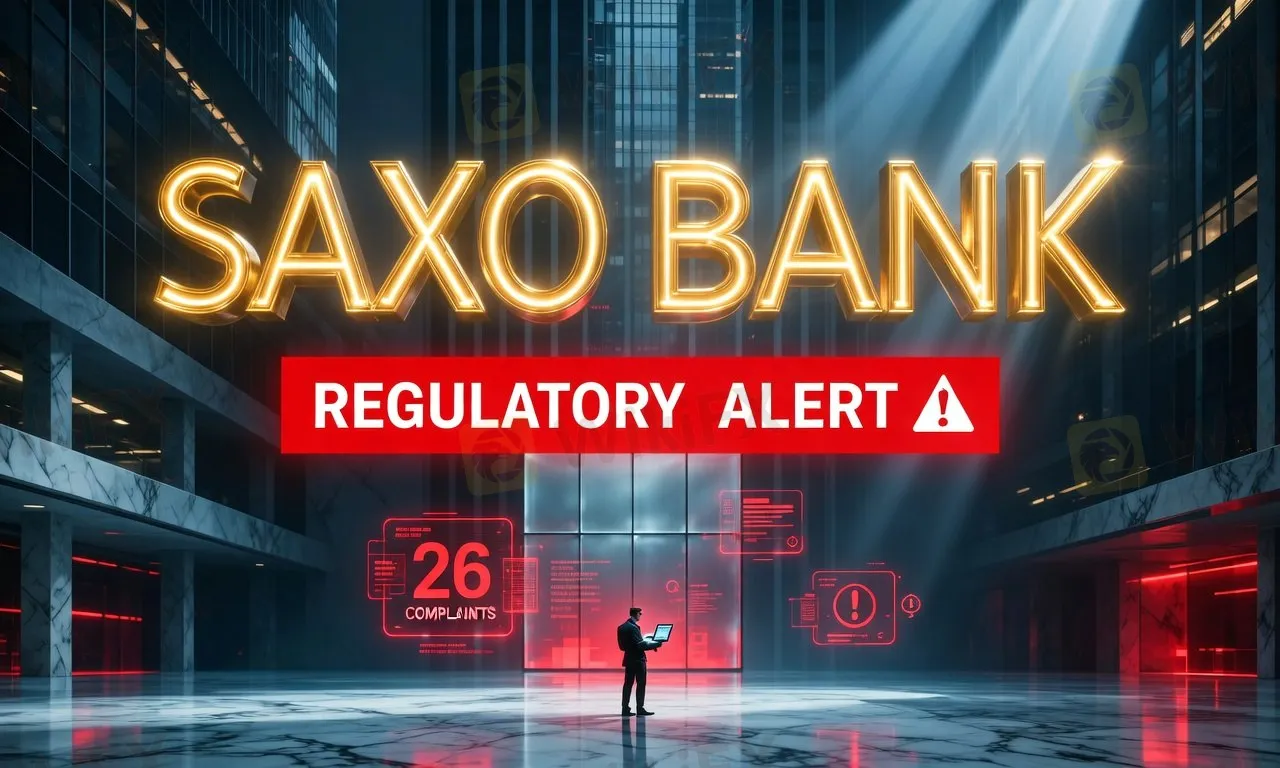
Executive Summary: Saxo Bank is a veteran financial institution established in 2001 with a high WikiFX Score of 7.76 and an 'AA' influence rank. While it holds reputable licenses in the UK, Singapore, and Japan, recent data flags 26 user complaints and specific regulatory interventions that every trader must understand before opening an account.
The “Safety First” Approach
Finding a trustworthy Forex broker can feel like walking through a minefield. You want to trade the markets, not worry about whether the company holding your funds will disappear overnight. In this review, we strip away the marketing noise surrounding Saxo Bank to see if their high standards hold up against real-world scrutiny. With a WikiFX score of 7.76, they sit comfortably in the upper echelon of the industry, but high scores don't always mean a perfect user experience.
Question 1: Regulation & Safety: Is my money safe?
When we analyze a broker's safety, we look for “Tier-1” licenses—these are the gold standards issued by strict government bodies. Saxo Bank performs exceptionally well here. Their regulation portfolio is robust and global.
The Evidence:
- United Kingdom: Regulated by the FCA (Financial Conduct Authority). License No. 551422.
- Singapore: Regulated by the MAS (Monetary Authority of Singapore).
- Japan: Regulated by the FSA (Financial Services Agency).
- Italy: Regulated by CONSOB.
What This Means For You:
Being regulated by authorities like the FCA and MAS is a massive safety net. These regulators require brokers to keep your money in “Segregated Accounts.” Imagine a glass wall between the broker's own bank account and the money you deposit. If the broker goes bankrupt, your money is theoretically safe behind that glass wall and cannot be used to pay the broker's debts.
Regulatory Warning Signs & Disclosures:
However, even safe brokers have bumps in the road. In 2020, the Japan FSA issued an administrative action against Saxo's Japanese entity due to a data breach at an outsourcing company. While this sounds scary, it shows that the regulator is watching them closely and punishing mistakes. Additionally, ASIC (Australia) issued temporary “Stop Orders” in 2023 regarding specific CFD products, forcing Saxo to revise its target market definitions to protect retail clients. These actions prove the regulation is active and working to protect you.
Question 2: Are the Forex trading conditions fair?
Because Saxo Bank operates under strict jurisdictions like the UK, Japan, and Singapore, their trading environment is heavily defined by consumer protection laws.
The Leverage Reality:
Unlike offshore brokers that might offer dangerous 500:1 leverage, Saxo Bank is bound by firm limits. In the UK and Australia, Forex leverage is typically capped at 30:1 for major currency pairs.
- Why does this matter? High leverage is a double-edged sword. While it can magnify wins, it can also wipe out your count in seconds. By enforcing lower leverage, regulators are trying to keep you in the game longer.
Cost Transparency:
While specific real-time spread data wasn't currently provided in this snapshot, highly regulated brokers usually offer competitive, transparent pricing to comply with “Best Execution” policies enforced by the FCA. This ensures you aren't getting ripped off on the price feed, a common trick among unregulated scams.
Question 3: What are real traders complaining about?
This is where things get interesting. Despite the high safety score, the WikiFX system has flagged 26 complaints in the last 3 months regarding Saxo Bank.
Interpreting the Data:
Usually, when a highly regulated bank receives a cluster of complaints, it doesn't mean they are stealing money (like a scam broker would). Instead, these complaints often revolve around strict compliance checks.
- The “KYC” Friction: Big banks have strict “Know Your Customer” (KYC) laws. If a trader tries to withdraw huge sums or deposit from a third-party source, the bank often freezes the transaction to investigate money laundering risks. To the trader, this feels like a scam. To the regulator, it's the law.
- Pro Tip: If you see complaints about “unable to withdraw,” check if the user had their account verified properly. With a broker like Saxo, compliance is the biggest hurdle, not theft.
Question 4: Security and Platform Access
Since Saxo Bank is a well-known brand, it suffers from a unique problem: Success breeds copycats.
The “Clone” Firm Danger:
The UK's FCA recently issued a warning about a “Clone Firm” calling itself “Saxo AI Innovation Bond.” These scammers use Saxo's name and address to trick people into sending money.
Your Security Protocol:
1. Check the URL: Always double-check that you are on the official website (e.g., `saxobank.com` or `home.saxo`) before entering your login details.
2. Verify Emails: The FCA noted that scammers used the email `corporate@saxowm.com`. If you receive a request for a login or deposit from a suspicious email, do not click it.
3. App Safety: Only download the trading app from official stores. Entering your login credentials into a fake app gives hackers instant access to your funds.
Final Verdict: Should I open an account?
Saxo Bank is the “battleship” of the brokerage world—huge, heavily armored with regulation (FCA, MAS, FSA), and reliable. It is safe for traders who prioritize fund security over high leverage.
However, the recent spike in 26 complaints suggests that their customer service or compliance teams might be overwhelmed. If you decide to join, be prepared for strict ID checks and potentially slower administrative processes.
Status changes daily. Before depositing, check the WikiFX App for the latest real-time certificate and complaint logs.
Disclaimer:
The views in this article only represent the author's personal views, and do not constitute investment advice on this platform. This platform does not guarantee the accuracy, completeness and timeliness of the information in the article, and will not be liable for any loss caused by the use of or reliance on the information in the article.
WikiFX Broker
Latest News
Managing False Breakouts: How to Spot and Trade the Liquidity Sweep Trap
WikiFXRoboForex Review 2026: Regulatory Warnings and Withdrawal Red Flags
WikiFXLONG ASIA Review 2026: Unverified Regulation and Withdrawal Risks
WikiFXYen Drops Past 163 On Oil
WikiFXUS Charges Two Over Alleged $43M Laundering Network
WikiFXSix Arrested in ₹2.68Cr Dubai-Linked Scam on Ex-IAF Officer
WikiFXHow to Tell if a Market Reversal at Support is Real
WikiFXBeirman Capital Review 2026: Unregulated Status and Key Risk Signals
WikiFXWhy the rupee keeps sliding despite RBI's $675bn arsenal
WikiFXSix Arrested in ₹20 Million Dubai-Linked Investment Scam
WikiFX