


Dufourbit Warning: FCA Says the Firm Is Unauthorised—7 Checks Before You Pay
The FCA warned about Dufourbit on 19 August 2026. Check the named domain, contact details, missing protections and seven steps before making any payment.
Original

简体中文
繁體中文
English
Pусский
日本語
ภาษาไทย
Tiếng Việt
Bahasa Indonesia
Español
हिन्दी
Filippiiniläinen
Français
Deutsch
Português
Türkçe
한국어
العربية
اردو




Abstract:A Malaysian activist has alleged the emergence of a new scam compound near Myawaddy, Myanmar, dubbed “KK Park 2.0,” highlighting how fraud syndicates may be adapting to regional crackdowns by shifting operations to remote, heavily secured locations.

Recent reports from Malaysian civil society observers suggest that a new scam compound, informally dubbed “KK Park 2.0,” may have emerged in the Myawaddy region of Myanmar. Although earlier large-scale scam hubs were dismantled through joint international operations, these newer facilities are believed to have shifted into more remote mountainous and jungle areas, with tighter security measures. This development indicates that scam syndicates have not disappeared, but are instead adapting and evolving their methods.
What should concern the Malaysian public even more is the frequent link between such cross-border scam networks and online investment fraud. In many cases, the ultimate objective of these operations is not limited to telecommunications scams, but extends to luring victims into so-called high-return investment schemes. Forex and cryptocurrency are among the most commonly exploited themes. Victims are often first approached through social media, unsolicited calls, or suspicious message links, before being guided into chat groups or persuaded to download trading platforms, where trust is gradually built.
These schemes are typically presented in highly convincing ways. Scammers may pose as investment mentors, platform representatives, or successful traders, showcasing seemingly professional analyses and fabricated profit records. Some even permit small withdrawals to enhance credibility. However, once larger sums are invested, problems frequently arise — ranging from withdrawal restrictions to demands for additional payments or sudden account limitations. The promised high returns often prove to be nothing more than bait.
In the current environment, Malaysians should exercise heightened caution. Avoid answering calls from unknown sources and be wary of clicking links received via SMS, WhatsApp, or Telegram. Many investment scams begin with what appears to be a harmless interaction. Legitimate financial institutions and regulated brokers do not typically promote “guaranteed profit” opportunities through unsolicited contact.
Similarly, any investment promising unusually high returns within a short period should be treated with skepticism. Financial markets inherently involve risk, and there is no such thing as consistent, risk-free windfall profits. The notion that “there is no free lunch” is not merely a cliché, but a reality reinforced by countless scam cases. Offers that sound too good to be true are often the clearest warning signs.
While scam tactics continue to grow more sophisticated, their underlying strategy remains unchanged: exploiting trust, greed, and information gaps. Whether involving phone scams or fraudulent trading platforms, the first line of defense is always personal vigilance and proper verification. Before committing funds, investors should confirm the regulatory status of any platform or institution and consult multiple independent sources of information.
With scams becoming increasingly pervasive, staying cautious and level-headed is far more effective than dealing with the consequences afterward. Safeguarding personal information and financial security must remain a priority for both investors and the general public.

Disclaimer:
The views in this article only represent the author's personal views, and do not constitute investment advice on this platform. This platform does not guarantee the accuracy, completeness and timeliness of the information in the article, and will not be liable for any loss caused by the use of or reliance on the information in the article.
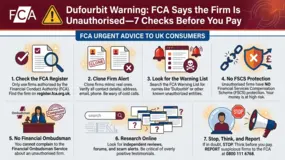
The FCA warned about Dufourbit on 19 August 2026. Check the named domain, contact details, missing protections and seven steps before making any payment.
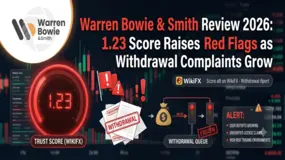
Was your trading experience with Warren Bowie & Smith, a Mauritius-based brokerage entity, not so fruitful? Did the broker tempt you into trading by giving you assurances of profits that never appeared on the Warren Bowie & Smith login dashboard? Did you struggle to withdraw profits from the trading platform? Upon your withdrawal request, did the broker official make you invest further? This Warren Bowie & Smith review examines serious trading allegations against the broker. Additionally, we have provided the broker’s regulatory status.
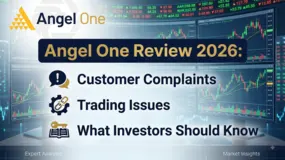
Angel One, an India-based brokerage entity, constantly receives allegations from users online. Users are complaining about withheld funds, poor customer support service, undesired trade execution orders, etc. In this Angel One review, let’s quickly go through these complaints, understand its regulatory framework and pay attention to the product portfolio.
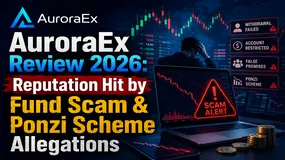
AuroraEx, a United States-based multi-asset brokerage entity, is facing serious user allegations over how it handles deposited funds. Many users have accused the broker of failing to meet its payment obligations. Some have questioned the broker over possible trade-related foul play, while others have alleged that it scammed them through a Ponzi operation. This AuroraEx review examines these user-reported allegations and provides an overview of the broker’s regulatory status.
WikiFXWikiFXWikiFXWikiFXWikiFXWikiFXWikiFXWikiFXWikiFXWikiFX