

Global Broker Regulation Inquiry App
About WikiFX
English
简体中文
繁體中文
English
Pусский
日本語
ภาษาไทย
Tiếng Việt
Bahasa Indonesia
Español
हिन्दी
Filippiiniläinen
Français
Deutsch
Português
Türkçe
한국어
العربية
اردو


Middle East Conflict Triggers Massive Oil Supply Shock

WikiFX
|


Abstract:Middle East escalations drive oil supply disruptions, with J.P. Morgan warning of a potential 4 million barrel per day output loss as storage tanks saturate and tanker capacity plummets.
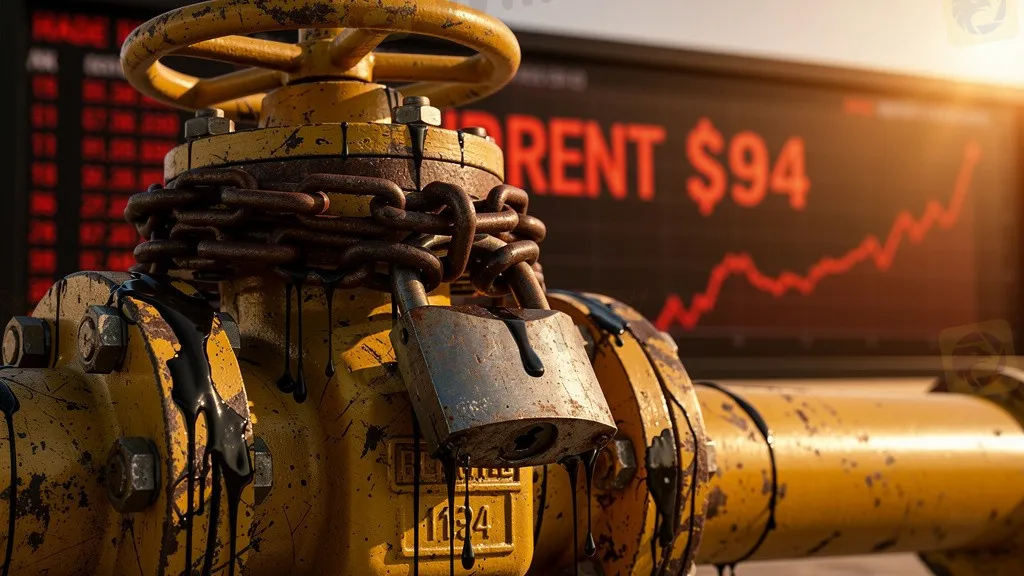
The geopolitical crisis in the Middle East has rapidly evolved into a major energy supply disruption, with J.P. Morgan analysts warning that production outages could exceed 4 million barrels per day (bpd) by the end of the week.
Escalating Physical Disruptions
Following the conflict's outbreak, supply disruptions have accelerated beyond initial expectations. While actual production cuts were estimated at 2 million bpd early in the crisis, the combination of saturated storage tanks and a severe shortage of available tankers is forcing producers to ramp up forced shutdowns.
Analysts highlight that the Persian Gulf faces a critical infrastructure bottleneck. As export routes remain constrained and floating storage fills, operators have no choice but to throttle or cease upstream production. Notably, Iraq has moved from warnings to active cuts, particularly at major hubs like Rumaila. Meanwhile, companies such as Adnoc (UAE) and Kuwait Petroleum have already signaled production adjustments due to transit safety concerns.
The Tanker Crisis and Storage Vulnerability
Data from Kpler indicates that the logistical impact is severe: active very large crude carriers (VLCCs) in the Persian Gulf have dwindled from 64 to just 14—a 78% collapse in available capacity.
- Industry models suggest Iraq and Kuwait are the most vulnerable, with extremely limited storage buffers.
- Saudi Arabia maintains higher resilience with approximately 229 million barrels of storage capacity, although this buffer will be tested as the conflict persists.
- Supply contraction has pushed Brent crude beyond $94/bbl, heavily impacting global pricing structures.
- US retail gasoline prices have hit two-year highs, with markets bracing for further volatility as storage saturation timelines compress.
Disclaimer:
The views in this article only represent the author's personal views, and do not constitute investment advice on this platform. This platform does not guarantee the accuracy, completeness and timeliness of the information in the article, and will not be liable for any loss caused by the use of or reliance on the information in the article.
WikiFX Broker
Latest News
BXB Review – Zero Regulation, Dead Website: What Traders Need to Know
WikiFXSingapore tightens monetary policy in surprise move as rising oil prices rekindle inflation risk
WikiFXSPREDIX MARKETS Review: What Traders Should Know Before Depositing
WikiFXHFM Review: No Regulatory Licences and a 1.83 Score , Is Your Deposit Safe?
WikiFXIs Your Withdrawal Plan Killing Your Compounding Gains?
WikiFXHFMARKETS TRADE Review: Zero Regulation and a Central Bank Warning
WikiFXWinvest Review: What Traders Should Know Before Depositing
WikiFXTrade Nation Review: What Traders Should Know Before Depositing
WikiFXFXPesa Review: Is Your Deposit Safe?
WikiFXXM Royal Scam Drains RM119,599 From Malaysian Housewife
WikiFX