

Global Broker Regulation Inquiry App
About WikiFX
English
简体中文
繁體中文
English
Pусский
日本語
ภาษาไทย
Tiếng Việt
Bahasa Indonesia
Español
हिन्दी
Filippiiniläinen
Français
Deutsch
Português
Türkçe
한국어
العربية
اردو


76 Million Baht ACT Token Scam Sparks International Manhunt

WikiFX
|


Abstract:Thai authorities have intensified their investigation into a cryptocurrency investment scheme that allegedly caused losses exceeding 76 million baht, as police move to secure an Interpol red notice for the main suspect.
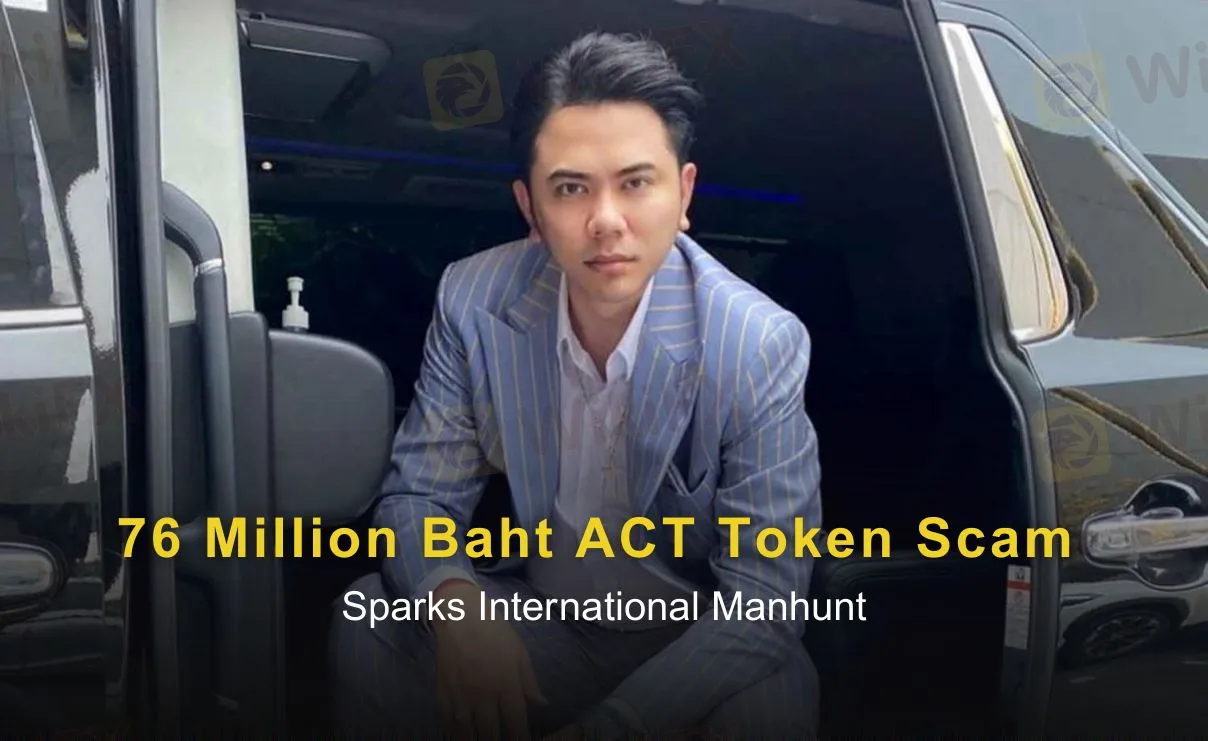
The individual at the centre of the case, Worawat “Acme” Naknaewdee, is believed to have left Thailand in November 2024 and is currently residing in the United Arab Emirates. Law enforcement officials are now working with international agencies in an target="_blank" kwlink="6384064000662588587096">effort to track him down and bring him back to face legal proceedings.
The case is being handled by Thailands Economic Crime Suppression Division (ECSD), which has received a growing number of complaints from investors who claim they were persuaded to place money into cryptocurrency ventures linked to Mr Worawat.
Dozens of Investors Report Losses
Investigators say at least 61 victims have formally filed complaints so far. Each investor reportedly committed between 1 million and 2 million baht, believing they were participating in legitimate digital asset opportunities.
Pol Maj Gen Thatphum Jaruprat, commander of the ECSD, stated that the confirmed financial losses currently stand at around 76 million baht. Authorities believe the figure could increase significantly as the investigation progresses and additional victims come forward.
The scale of the alleged scheme has raised serious concerns among regulators, particularly as cryptocurrency investments continue to attract retail investors across Southeast Asia.
Promises of High Returns Raise Red Flags
According to investigators, the suspect allegedly promoted investment opportunities that promised exceptionally high returns. In some cases, the projected profits reportedly reached up to 100 per cent, a figure that authorities say far exceeds the limits allowed under Thai financial regulations.
Such promises have led investigators to consider whether the operation may constitute illegal public borrowing or a pyramid-style investment scheme.
Authorities believe that investors were drawn in by the prospect of rapid gains linked to cryptocurrency markets, a sector that remains volatile and, in some areas, lightly regulated.
Scrutiny Over ACT Digital Token
target="_blank" kwlink="6384064000971585773080">Central to the investigation is the creation of a cryptocurrency known as ACT, a digital token reportedly developed by Mr Worawat himself.
Police are examining whether the token was used as a tool to attract investment funds. Even if a company was not formally registered, regulators have warned that issuing and trading privately created digital assets could still violate financial regulations.
Officials emphasised that informal token trading between individuals does not automatically remove legal responsibilities, particularly when the asset is promoted as an investment opportunity to the public.
Wider Network Under Investigation
Authorities believe the suspect may have operated within a broader network rather than acting alone. Investigators are currently examining individuals who may have helped promote the scheme, recruit investors, or manage the flow of funds.
However, police have clarified that there is no evidence linking Mr Worawats wife, Nutcha “Nonny” Schumacher, a Thai-German actress, to the alleged activities.
The clarification was issued to prevent speculation as authorities continue to identify individuals who may have played a role in the operation.
Earlier Warnings From Regulators
The alleged scheme had already attracted attention from regulators before the suspect left Thailand.
Thailands Securities and Exchange Commission (SEC) filed two complaints against Mr Worawat last year, raising concerns about the investment activities linked to the ACT token. Those complaints eventually resulted in two arrest warrants, which now form the basis of the ongoing investigation.
With the suspect believed to be overseas, Thai authorities are seeking international assistance to locate and detain him.
Why Malaysian Investors Should Pay Attention
Although the case is unfolding in Thailand, the warning signs are highly relevant for investors in neighbouring Malaysia. The two countries share close geographical proximity, and online investment schemes can easily cross borders through social media, messaging platforms, and digital advertising. Fraud networks often target multiple markets across Southeast Asia once a scheme gains momentum. As interest in cryptocurrency investments continues to grow among Malaysian retail investors, incidents such as the ACT token scam highlight how quickly fraudulent opportunities can spread beyond their country of origin. Remaining cautious and verifying the legitimacy of investment platforms remain the most effective safeguards against falling victim to similar schemes.
A Growing Regional Threat
The alleged 76 million baht ACT token case reflects a wider challenge facing regulators across the region. Cryptocurrencys rapid growth has created new opportunities for legitimate innovation, but it has also opened the door for fraud schemes that can attract large numbers of investors in a short period.
As authorities expand the investigation and pursue the suspect internationally, the case stands as a stark reminder of how quickly high-return promises can turn into devastating financial losses.
For many victims, the search for accountability has only just begun.

Disclaimer:
The views in this article only represent the author's personal views, and do not constitute investment advice on this platform. This platform does not guarantee the accuracy, completeness and timeliness of the information in the article, and will not be liable for any loss caused by the use of or reliance on the information in the article.
WikiFX Broker
Latest News
Still Trusting Telegram Signals? This Is Why You Are Still Not a Profitable Trader
WikiFXDarwinex Review: Regulated but Office Not Found with Trader Complaints?
WikiFXBROKSTOCK Review: What Traders Should Know Before Depositing
WikiFXRBI Ends Deposit Rate Discrimination Between Branches
WikiFXOROKU EDGE Review: Blacklisted by SCM Malaysia and Users Report Frozen Funds
WikiFXWhy Do Forex Brokers Show Different USD/MYR Quotes?
WikiFXAs Warsh‘s Fed faces pressure to act on inflation, these indicators show it’s at its lowest in years
WikiFXVAULT MARKETS Review: Is Your Deposit Safe?
WikiFXFONDEX Review 2026: Things FONDEX Broker Might Not Want You To See
WikiFXChasing Price: The Psychology That Sinks New Forex Traders
WikiFX