Abstract:The Financial Industry Regulatory Authority (FINRA) has filed a formal complaint against Spartan Capital Securities LLC, its CEO John Dennis Lowry, and its former Chief Compliance Officer (CCO) Kim Marie Monchik. The Department of Enforcement alleges a sophisticated scheme to defraud customers during a pharmaceutical company’s initial public offering (IPO), resulting in over $50 million in profits for the firm and its insiders while customers were left with dramatic losses.
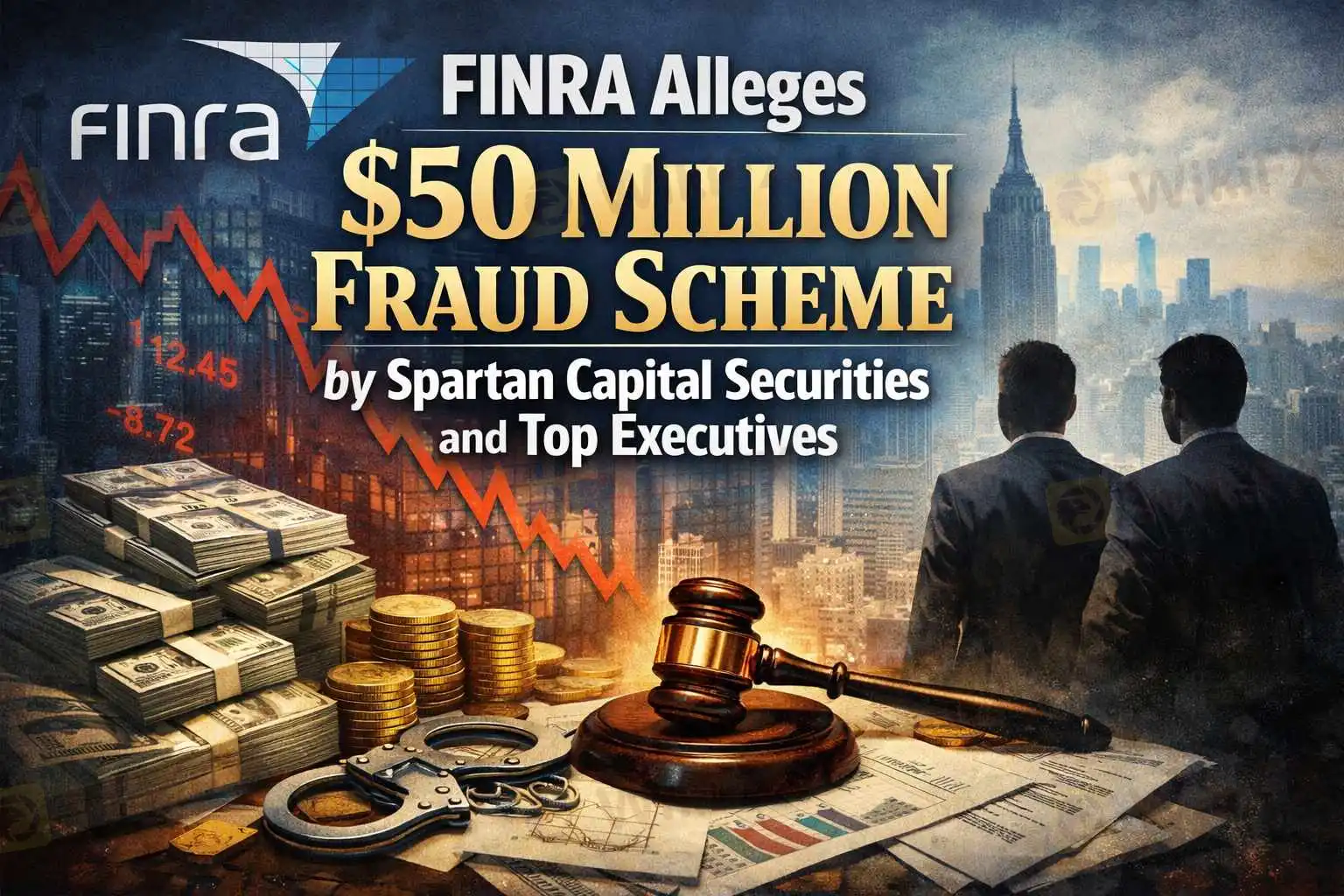
The Financial Industry Regulatory Authority (FINRA) has filed a formal complaint against Spartan Capital Securities LLC, its CEO John Dennis Lowry, and its former Chief Compliance Officer (CCO) Kim Marie Monchik. The Department of Enforcement alleges a sophisticated scheme to defraud customers during a pharmaceutical companys initial public offering (IPO), resulting in over $50 million in profits for the firm and its insiders while customers were left with dramatic losses.
The “Two-Track” Sale Scheme
According to the complaint, the misconduct occurred between April and July 2021. Spartan had served as the placement agent for a company developing Alzheimers treatments. Consequently, Spartan, its employees (including Monchik), and many of its customers held restricted pre-IPO shares.
When the company went public, all shareholders were eager to sell. However, the Department of Enforcement alleges that the Respondents created an uneven playing field:
- For Customers: Spartan informed clients they must follow a “cumbersome and time-consuming” process to lift share restrictions. This involved a multi-party chain including the issuer, outside counsel, transfer agents, and clearing firms. This process took six weeks or more.
- For Insiders: Spartan, Lowry, and Monchik allegedly utilized a “deemed owned” short-selling process. This allowed them to sell their shares immediately at peak IPO prices, providing a 35-day settlement window to finalize the paperwork later.
The Result: By the time customers were cleared to sell, the stock price had plummeted. While Spartan and its staff secured $50 million in gains, customers were trapped watching their investment value vanish. Spartan allegedly never disclosed that a faster selling method existed or that firm insiders were using it to exit their positions first.
Undisclosed Compensation and “Unreasonable” Fees
Beyond the trading scheme, FINRA alleges that Spartan violated the Corporate Financing Rule (Rule 5110). As the IPO underwriter, Spartan was required to disclose all compensation to FINRA to ensure fees were fair and reasonable.
The complaint alleges Spartan failed to disclose:
- $475,000 in cash payments.
- 500,000 shares issued by the company to help prepare for the IPO and exchange uplisting.
When added to the previously disclosed amounts, FINRA asserts the total compensation reached “unreasonable” levels, violating both transparency and fairness standards.
Systemic Supervisory Failures
FINRA also targeted the firms internal governance, alleging a failure to maintain a reasonable supervisory system under Rule 3110.
- Conflict of Interest: The firm allegedly allowed Lowry and other employees to supervise the very sales in which they had a personal financial interest.
- Lack of Oversight: Spartan reportedly had no written procedures or systems in place to ensure compliance with the Corporate Financing Rule, allowing the undisclosed compensation to go unchecked.
Alleged Violations
The Respondents face multiple charges, including:
- Section 10(b) of the Securities Exchange Act and Rule 10b-5: Anti-fraud provisions.
- FINRA Rule 2020: Use of manipulative, deceptive, or other fraudulent devices.
- FINRA Rule 2010: Failure to observe high standards of commercial honor and just and equitable principles of trade.
- FINRA Rule 5110: Violations of the Corporate Financing Rule.
Next Steps
Under FINRA rules, the Respondents will have the opportunity to file an answer and request a hearing. Potential sanctions could include fines, censures, and permanent bars from the securities industry.