


Global Broker Regulation Inquiry App
About WikiFX
English
简体中文
繁體中文
English
Pусский
日本語
ภาษาไทย
Tiếng Việt
Bahasa Indonesia
Español
हिन्दी
Filippiiniläinen
Français
Deutsch
Português
Türkçe
한국어
العربية
اردو

Larry Fink Predicts $150 per oil barrel, is it possible?
Abstract:The idea of $150 oil stops sounding abstract once you run the numbers through the system.
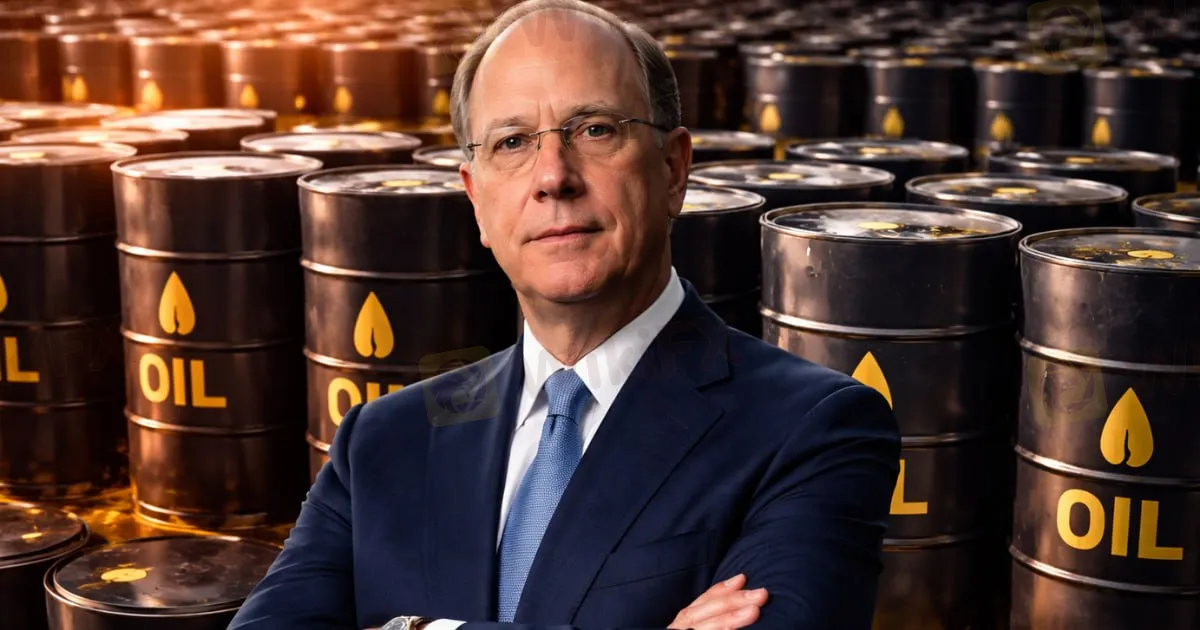
BlackRock CEO Larry Fink isn‘t talking about a small move, he’s pointing at a roughly 60 to
70 percent jump from the $85 to $95 range weve been sitting in recently. Every $10
increase in crude typically adds around 0.2 to 0.3 percentage points to global inflation, so a
move to $150 could easily tack on 1 to 1.5 percent. That matters when most major
economies are still hovering around 3 to 5 percent inflation. Markets care because this
doesnt just hit energy, it cascades into freight rates, food costs, and eventually wages. By
the time CPI prints reflect it, positioning has already shifted.
On the supply side, the numbers are tight. Global oil demand is sitting near 102 million
barrels per day, while effective spare capacity is estimated at just 3 to 4 million barrels,
mostly controlled by OPEC. That buffer is thin, especially when you factor in geopolitical risk
across regions producing over 20 percent of global supply. At the same time, upstream
investment is still about 25 percent below pre-2019 levels, which limits how quickly new
supply can come online. When prices rise into triple digits, central banks dont get relief, they
get pressure, because energy-driven inflation is harder to suppress with rate hikes. Thats
where liquidity tightens again, with real rates staying elevated and credit conditions
tightening. In forex terms, oil importers like Japan and much of Europe see trade deficits
widen quickly, which accelerates currency devaluation against commodity-linked currencies.
What stands out is how muted positioning still feels relative to those numbers. If traders were
fully convinced, you would likely see Brent futures pricing well above $100 already and
volatility pushing toward 40 percent, but its been closer to the mid-20s. That suggests the
market is pricing maybe a 20 to 30 percent probability of a sustained spike, not a base case.
Part of that comes from recent history where oil hit $120 in 2022 and then retraced over 30
percent within months. But structurally, the setup is tighter now, with U.S. shale growth
slowing to around 300,000 to 500,000 barrels per day annually, compared to over 1 million in
prior cycles. Even in Blackrock Forex allocations, flows into commodity currencies like the
Canadian dollar and Norwegian krone are building gradually, not aggressively, which tells
you conviction is still forming.
If oil pushes toward $150, the macro math starts to break things. Global GDP growth,
currently projected around 2.5 to 3 percent, could drop by 0.5 to 1 percentage point based
on historical sensitivity to energy shocks. Consumer spending takes a hit as fuel costs eat
into disposable income, and corporate margins compress as input costs rise faster than
pricing power. Forex markets will likely reflect this early, with sharp moves in current account
deficit countries and increased volatility across G10 pairs. Theres also a real chance central
banks pause or even reverse tightening despite inflation running hot, just to avoid deeper
contraction. Thats where currency devaluation becomes less of a side effect and more of a
policy choice. It‘s not a guaranteed path, but if the move starts, the numbers suggest it won’t
stay contained for long.
Disclaimer:
The views in this article only represent the author's personal views, and do not constitute investment advice on this platform. This platform does not guarantee the accuracy, completeness and timeliness of the information in the article, and will not be liable for any loss caused by the use of or reliance on the information in the article.
WikiFX Broker
Latest News
Review 2026: Dollars Markets Complaints, Withdrawals, and Regulation Risks
 WikiFX
Vonway Forex Review 2026: Withdrawal Complaints, Regulation Warnings, and Account Risks
WikiFXStructuring a Practical Forex Trading Plan and Stop-Loss Strategy
WikiFXUbuntu Invest Review 2026: Is This Forex Broker Safe?
WikiFXAlpari Review 2026: Complaints, Warnings, and Risk Signals
WikiFXSquaredFinancial Review 2026: Heavy Complaints, Withdrawal Delays, and Profit Deletions
WikiFXOver 100 Malaysian Retirees Gather to Expose How Investment Scams Wiped Out Their Life Savings
WikiFXAvaTrade Seeks to Acquire FXCM Operator Stratos
WikiFXFactory job cuts in June neared financial crisis and Covid levels, S&P says
WikiFXReview 2026: Interactive Brokers Regulation, Complaints, and Platform Access
WikiFXCurrency Calculator
USD

CNY
Current Rate:0
Enter amount
USD
Redeemable Amount
CNY
Calculate 