

Global Broker Regulation Inquiry App
About WikiFX
English
简体中文
繁體中文
English
Pусский
日本語
ภาษาไทย
Tiếng Việt
Bahasa Indonesia
Español
हिन्दी
Filippiiniläinen
Français
Deutsch
Português
Türkçe
한국어
العربية
اردو
KCM Trade Review: Regulation, Licences and WikiScore Analysis
Abstract:This KCM Trade review provides a detailed analysis of the broker’s regulatory framework, licensing structure, and overall standing based on information available on WikiFX.
This KCM Trade review provides a detailed analysis of the brokers regulatory framework, licensing structure, and overall standing based on information available on WikiFX. As a global broker regulatory query platform, WikiFX evaluates brokers using criteria such as regulatory authorisation, compliance transparency, and operational indicators.
According to WikiFX, the KCM Trade broker holds a WikiScore of 7.80 out of 10, placing it within a moderately strong tier among brokers listed on the platform. This score reflects a combination of regulatory coverage and operational factors that contribute to its position in the global trading environment. For traders assessing KCM Trade regulation, understanding the licences held by the broker and the authorities behind them is essential.
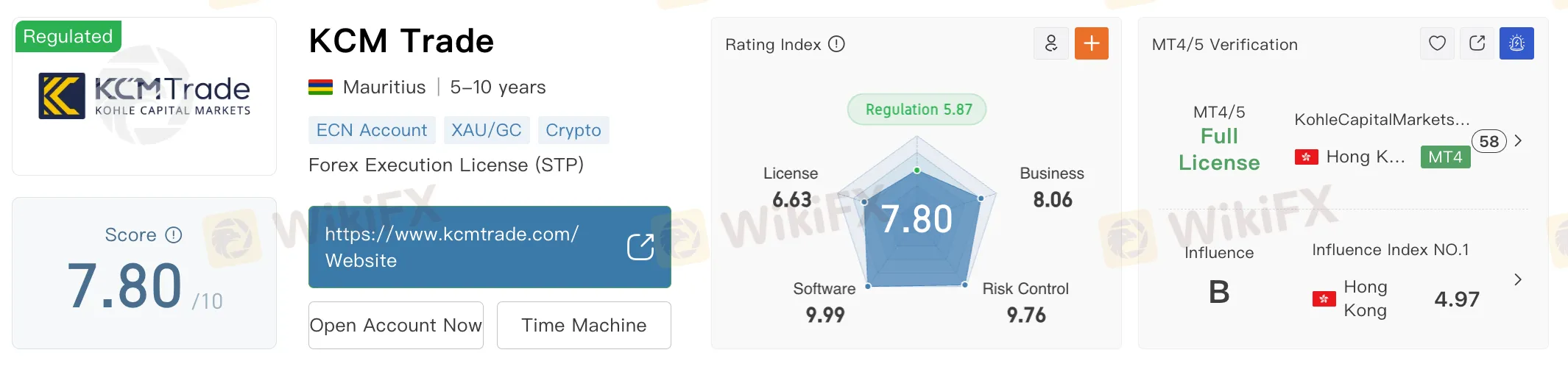
View WikiFX's full review on KCM Trade broker here: https://www.wikifx.com/en/dealer/4791832140.html
KCM Trade operates under licences issued by the Australia Securities and Investment Commission and the Financial Services Commission. These licences form the foundation of regulation KCM Trade, supporting its operations across different jurisdictions.
 Contents
KCM Regulation and Licenses:
Australia Securities and Investment Commission
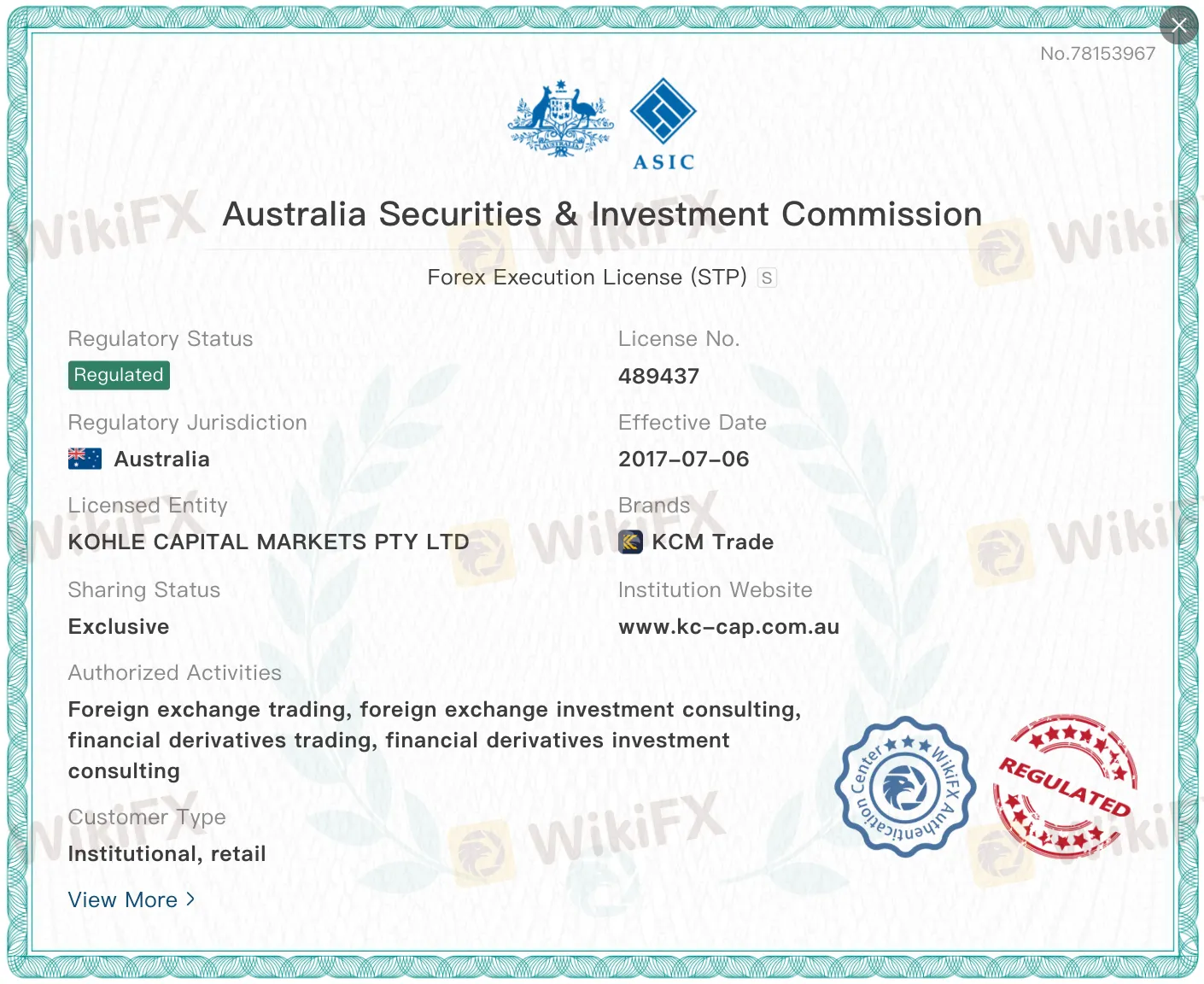
A central component of KCM Trade regulation is its authorisation by the Australia Securities and Investment Commission under a Forex Execution Licence with licence number 489437. ASIC is widely recognised as a major financial regulator and is responsible for overseeing financial markets and service providers in Australia.
Firms regulated by ASIC are required to comply with stringent standards, including capital adequacy requirements, segregation of client funds, and regular financial reporting. The regulator also enforces conduct of business rules designed to ensure transparency and protect investors.
The Straight Through Processing execution model associated with this licence indicates that client orders are typically routed directly to liquidity providers rather than being internally matched. This structure may reduce potential conflicts of interest, although execution practices depend on the brokers internal systems and policies.
From a review KCM Trade perspective, the ASIC licence represents a significant element of the brokers regulatory profile, as it reflects compliance with a well established and recognised authority.
Financial Services Commission of Mauritius
KCM Trade is also authorised by the Financial Services Commission under a Securities Trading Licence with licence number C117022600. The Financial Services Commission operates in offshore jurisdictions such as Mauritius and is responsible for regulating non banking financial services, including investment firms and brokers.
The FSC sets standards for licensing, compliance, and governance, requiring firms to maintain operational transparency and adhere to regulatory obligations. However, offshore financial centres may apply different levels of supervision and enforcement compared with larger regulatory authorities.
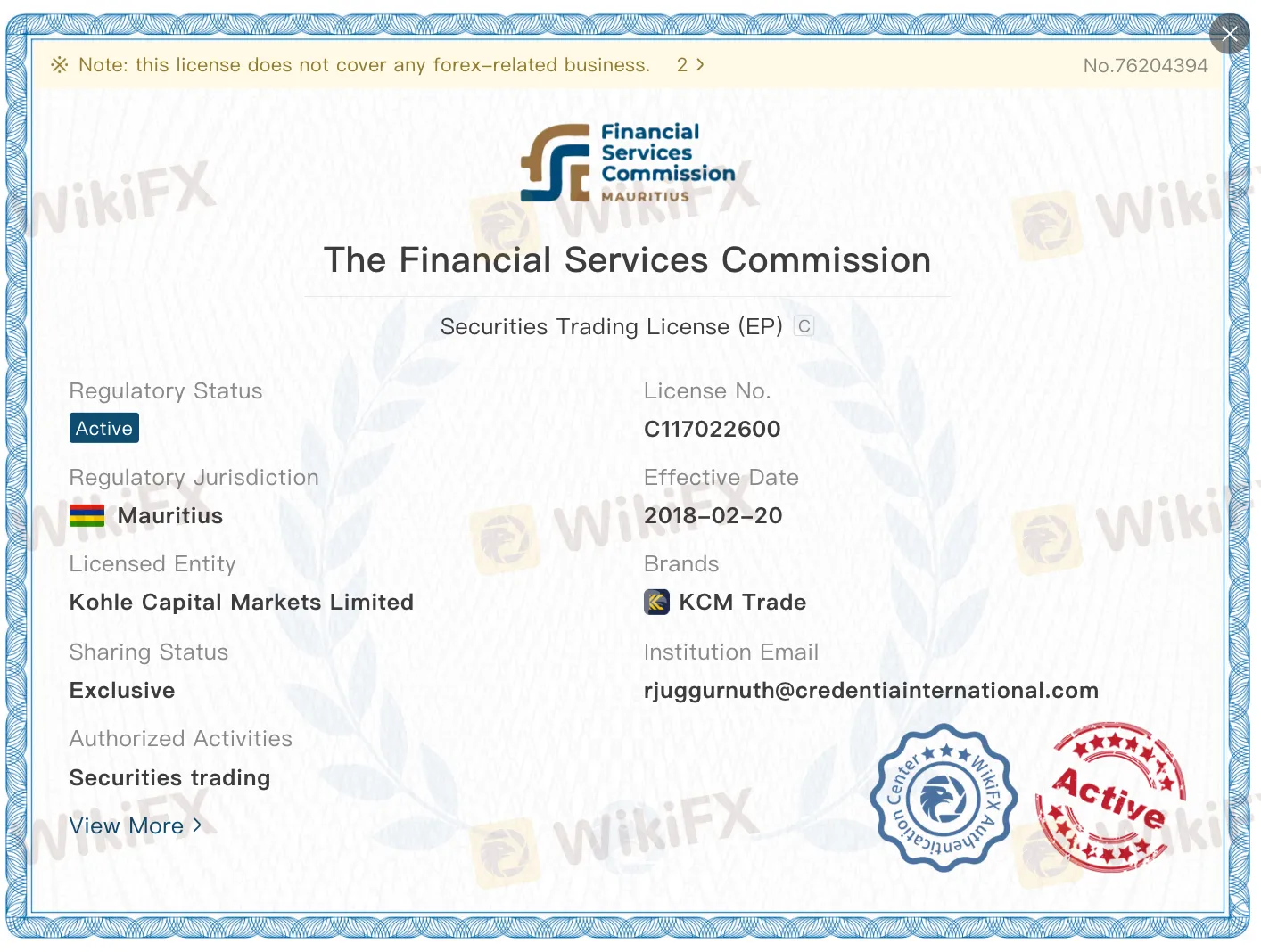
From a KCM Trade review standpoint, this licence supports the brokers ability to operate internationally and serve a wider client base. At the same time, the level of investor protection associated with offshore regulation may differ from that provided by authorities such as ASIC.
The Role of Regulation in Broker Assessment
Regulation plays a central role in evaluating brokers, as it defines the standards under which they operate. Licensed brokers are generally required to maintain transparency, safeguard client funds, and comply with financial reporting obligations.
The presence of licences from recognised authorities can enhance confidence in a brokers operational framework. At the same time, regulation does not eliminate all risks associated with trading, and differences in jurisdiction should be taken into account.
For those assessing the broker KCM Trade, examining both the scope and quality of its regulatory licences provides a more comprehensive understanding of its operations. This is particularly relevant for traders engaging in KCM Trade Forex, where execution conditions and regulatory protections may vary depending on the governing entity.
Offshore and Onshore Regulatory Balance
The combination of ASIC and FSC licences reflects a balance between onshore and offshore regulation. The ASIC licence provides a structured regulatory environment with established investor protection measures, while the FSC licence supports international expansion.
This dual structure is common among global brokers, allowing them to cater to different markets while maintaining regulatory compliance.
From a KCM Trade regulation perspective, this highlights the importance of understanding the regulatory framework in detail rather than relying solely on the presence of multiple licences.
Conclusion
This KCM Trade review highlights a broker with a WikiScore of 7.80 out of 10 and a regulatory framework supported by licences from the Australia Securities and Investment Commission and the Financial Services Commission. These licences provide oversight across both established and offshore financial environments.
Disclaimer:
The views in this article only represent the author's personal views, and do not constitute investment advice on this platform. This platform does not guarantee the accuracy, completeness and timeliness of the information in the article, and will not be liable for any loss caused by the use of or reliance on the information in the article.
WikiFX Broker
Latest News
Malaysia’s Pension Fund (KWAP) Hit by eFishery Fraud Scandal with RM163 Million at Risk
 WikiFX
EMAR MARKETS Review 2026: FSCA Regulation, Withdrawal Complaints, and Account Access Risks
WikiFXFacing a 20% Floating Loss: How Beginners Can Prevent a Margin Call
WikiFXInstaForex Review 2026: Is This Forex Broker Safe?
WikiFXSandStoneFX Review 2026: Is This Forex Broker Safe?
WikiFXFake Investment Scam and Human Trafficking Network Busted with 109 Arrested
WikiFXForex Traders With Day Jobs: The PERKESO Deadline You Cannot Ignore
WikiFXMaxpro365 Review 2026: Where Is My $23,000? We Investigated User Allegations About Missing Funds
WikiFXHow Trading Costs Quietly Drain Your Account: Spreads, Swaps, and Pip Values
WikiFXWhy MetaTrader 4 Remains the Top Choice for Testing Automated Trading Robots
WikiFX