

Global Broker Regulation Inquiry App
About WikiFX
English
简体中文
繁體中文
English
Pусский
日本語
ภาษาไทย
Tiếng Việt
Bahasa Indonesia
Español
हिन्दी
Filippiiniläinen
Français
Deutsch
Português
Türkçe
한국어
العربية
اردو


SEBI Warns of AI Deepfake 'Boss Scam' Hitting Finance Teams

WikiFX
|


Abstract:SEBI has warned listed companies and regulated entities about the AI-driven "Boss Scam," a CEO impersonation fraud using deepfakes, voice cloning, and malware to trick finance officials into transferring funds.
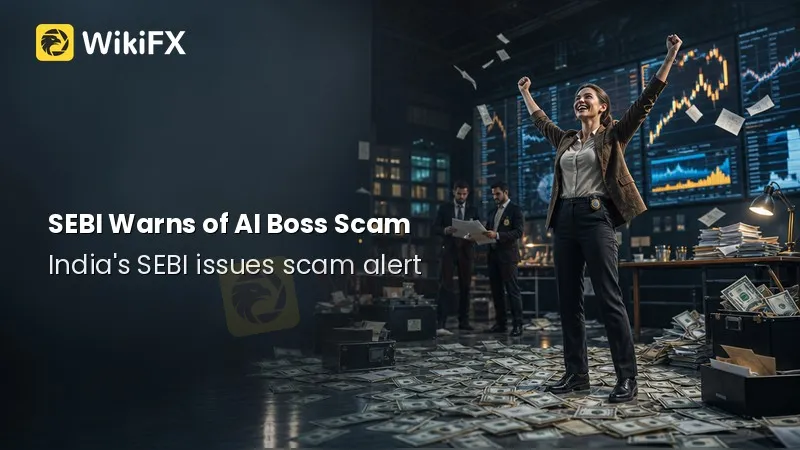
India's Securities and Exchange Board (SEBI) has issued a public advisory warning listed companies and regulated entities about a rapidly emerging cyber fraud known as the “Boss Scam,” in which criminals use artificial intelligence to impersonate senior executives and trick finance staff into transferring company funds.
The statement, released on Friday, July 17, 2026, follows an alert from the Indian Cyber Crime Coordination Centre (I4C) flagging a growing trend of CEO and managing director impersonation carried out through digital communication tools.

How the Scam Works
In a typical Boss Scam, fraudsters pose as senior executives through email, WhatsApp, Microsoft Teams, or other social media platforms and instruct finance personnel to execute urgent fund transfers. The messages are crafted to appear confidential and often discourage verification by citing sensitive or unpublished information, according to SEBI.
Perpetrators are increasingly deploying advanced techniques such as deepfake voice cloning and AI-generated video calls to make the impersonation more convincing, the regulator noted.
Malware and Device Hijacking
SEBI also described a second attack method in which fraudsters send malicious ZIP files containing malware. Once opened, these files can compromise systems and hijack active WhatsApp Web session tokens, enabling criminals to send payment instructions directly from legitimate company accounts.
In a further layer of deception, attackers may alter contact details on compromised devices, replacing genuine executive phone numbers with fraudulent ones. This means a finance employee who attempts to call back and verify a suspicious instruction could unknowingly reach the fraudster.
What Companies Should Do
SEBI has advised all regulated entities to independently verify any financial instruction received through digital platforms by directly contacting the concerned official through a known, trusted channel. Firms should not act solely on messages received via social media or messaging platforms and must avoid installing unverified executable files.
The regulator urged companies to immediately report any cyber fraud incidents through the national cybercrime helpline at 1930 or via the official cybercrime reporting portal.
Disclaimer:
The views in this article only represent the author's personal views, and do not constitute investment advice on this platform. This platform does not guarantee the accuracy, completeness and timeliness of the information in the article, and will not be liable for any loss caused by the use of or reliance on the information in the article.
WikiFX Broker
Latest News
Managing False Breakouts: How to Spot and Trade the Liquidity Sweep Trap
WikiFXRoboForex Review 2026: Regulatory Warnings and Withdrawal Red Flags
WikiFXLONG ASIA Review 2026: Unverified Regulation and Withdrawal Risks
WikiFXYen Drops Past 163 On Oil
WikiFXUS Charges Two Over Alleged $43M Laundering Network
WikiFXSix Arrested in ₹2.68Cr Dubai-Linked Scam on Ex-IAF Officer
WikiFXHow to Tell if a Market Reversal at Support is Real
WikiFXBeirman Capital Review 2026: Unregulated Status and Key Risk Signals
WikiFXWhy the rupee keeps sliding despite RBI's $675bn arsenal
WikiFXSix Arrested in ₹20 Million Dubai-Linked Investment Scam
WikiFX