Abstract:Technology has changed almost every field in the last decade like WikiFX VPS, but it has brought a major change in capital markets, including increased participation from retail investors.
There are an estimated over 38 million internet users in South Africa, but still only around 200,000 online retail traders who invest in various markets namely Equity, Bonds, Commodities and derivatives markets.
More online brokerages are now operating in South Africa than ever before to serve the growing interest in the region. Most of these apps support mobile trading, and the ease at which retail trading can be carried out online from downloading the App, to registration and account funding, has made even the elderly pick interest and engage in trading.
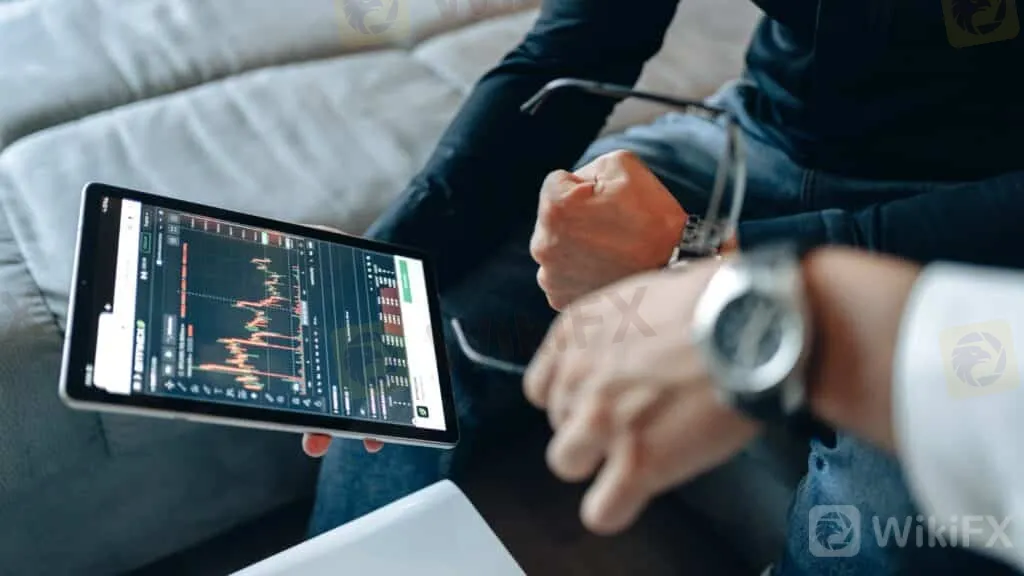
A change in the way business is done
Before the advent of technology, full-service brokerages charged exorbitant fees, and had very high capital requirements because of the monopoly they had in the market. Some even charged commissions as high as 5-10% fees on transactions.
Only a few wealthy people could afford to participate in the markets.
Today, with online brokers and automated trading, the human element has been reduced and many online brokers now charge less than 0.1% commission for a transaction. There are even some Zero fees investing brokerages, like Robinhood in the US.
First, traders today have easy access to information about the company whose stock they want to trade. Balance sheets, profit and loss statements, and cash flow statements can now be downloaded online for free.
The regulator of the capital market in South Africa, the Financial Sector Conduct Authority (FSCA) also has a lot of free information to guide traders on its website. Investor education and awareness is higher now than it has ever been in the past.
Stock exchanges now have their own websites and have also deployed their own mobile Apps on mobile phone App stores which provide a market snapshot, a regularly updated list of all listed companies, list of all market players etc.
Some stock exchange Apps even guide you with a graphical side by side comparison of the traded volume and traded price of listed companies from different sectors. This can help an investor or a trader to make an informed decision.
Not wanting to be outdone, online trading Apps now have free features such as demo trading for new traders, investor education, and market news. All of these were difficult to come by in the past as traders would have to pay for hardcopies of documents and wait days for courier to deliver them.
Second, today there is more transparency in the way brokerages carry out their business. This is because traders are now smart and have a lot of information at their disposal.
Traders can easily compare brokerage fees, spread and service. There are also websites that compare brokers using parameters such as commissions, regulation, minimum deposit etc. This has made traders sit up and conduct their affairs more professionally.
Third, technology has also helped market regulators to do a better job of overseeing the affairs of market participants. Regulators dont have to deal with loads of paperwork since they can just request soft copies from financial service providers (FSPs). Traders can also leave good or bad reviews on the online mobile App store about a brokers trading App so brokers are forced to keep improving their trading Apps, and embrace change.
Application programming interface (API) is a technology that enables different trading Apps to communicate with each other in harmony and is used by various platforms such as metatrader4 which is one of the most popular trading platforms. The API also allows trading App developers to link different plugins to an App such as charts, indicators etc. All of these would be impossible without technology.
Risk management is now also more convenient than it was before as stop loss orders are now automated. This reduces the possibility of human error as was the case when there was no technology to automate stop loss orders. Traders can now be confident that they wont lose all their capital.
Technology has encouraged Retail Trading
Before, online trading & retail investing was viewed by most individuals as a complex subject better left for the highly educated professional traders. Mostly the banks were involved in this.
However, with so many Apps developed and available in Google App stores, and catchy advertising campaigns to create awareness, there has been a general awareness.
Young South Africans are now choosing to trade themselves in the markets. Most of the trading apps are available for download at the click of a button. The Apps have been equipped with features like demo trading and educative materials to further school the eager users and this has helped create a generation of good and knowledgeable traders.
But participation by retail investors also comes with risks, which have been well documented by major regulators, including the FSCA. This includes scams, losses for retail investors, and other risks.
Many Online Traders have Lose money to Scams
Technology has made the internet available to a lot of South Africans, some of whom are not very tech savvy. Villagers from remote parts of South Africa dont realize how desperate scammers are and they still trust in the goodness of people and expect people to be honest.
The FSCA issues licenses to brokers and regulates capital market activities in South Africa.
However, some rogue brokers still operate without authorization from the FSCA and they are able to deploy their mobile apps to app stores thus deceiving many traders into thinking they must be authentic. Once the victims download the apps and credit their trading accounts, fake alerts and statements are sent to them and when they request for their cash they are met with excuses or even ignored totally.
Not every South African on the street may know that every broker should be licensed by the FSCA, so they just download Apps and start using them.
Social media aided investment scams have also fleeced South Africans of their money. Fake social media investment gurus on Facebook, Instagram etc. have tremendous followership, many of whom end up giving cash to these fake gurus who end up running away with their funds.
Forex Ponzi and pyramid schemes also thrive on social media on Facebook groups, WhatsApp groups etc.
The case of worldwide investments, who claimed to be a forex fund manager in South Africa is an example. They created a WhatsApp group, added members to the group, and asked them to give money to the fund manager to trade in forex. In the end, many investors lost their funds as they ended up being blocked from the WhatsApp group when they demanded back their money.
Gamification of Trading
These days trading App designers have oversimplified the Apps. It now looks as if trading is a binary activity involving yes or no choices.
Although a trading App has to be easy to use and have a friendly user interface, a more informative user interface should be created for trading in derivative products and other complex products.
The user interface should be built to highlight the volatility of the underlying asset complete with warning signs. Also, even when a trader clicks on “yes” to authorize a transaction concerning derivative products, an additional confirmation button should pop up such as “are you sure you want place this order”. This will remove the element of gamification and let the traders know they are not just gambling.
Excessive leverage has also been offered by some brokers to inexperienced online retail traders and for very volatile asset classes. Almost all the forex brokers in South Africa offer as high as 1:500 or higher leverage to traders, as there is no restriction on the leverage. This has caused many traders to trade on excessive leverage which backfired when the market moved against them and they ended up losing more than their initial investment.
Retail Trading is better off with technology
Without technology, many would not have had access to financial markets, and only a few would have benefitted.
Despite the disadvantages of technology in retail trading such as an increase in scams, tendency to gamble, and deployment of unregulated online trading Apps etc. we are still better off than what was obtainable before.
In the past, trading was so slow, there was a lot of human input and hence human error and there was no transparency hence a prevalence of insider abuse.
Today a market woman in Limpopo can have access to the stock market without the hassle of paying transport to the city to visit a broker. A person who is bedridden can still trade online from his mobile phone. Brokers can no longer charge exorbitant fees as there is now democratization in online trading and nobody can claim a monopoly.
None of this would have been possible without technology so the advantages definitely outweigh the disadvantages.
But there is still an active need for oversight & education, so as to reduce scams, and educate traders in the risks of instruments like derivatives.
Today anyone with a mobile phone and a laptop can trade from anywhere. Retail traders & investors need to be careful and patronize only FSCA licensed brokers, educate themselves via demo trading, read investor education articles such as this one, use leverage sparingly, and be security conscious when online.