Abstract:T3 Trading Group settles with FINRA for $175,000 over multi-year Rule 606(a) reporting and supervision failures, agreeing to corrective actions.
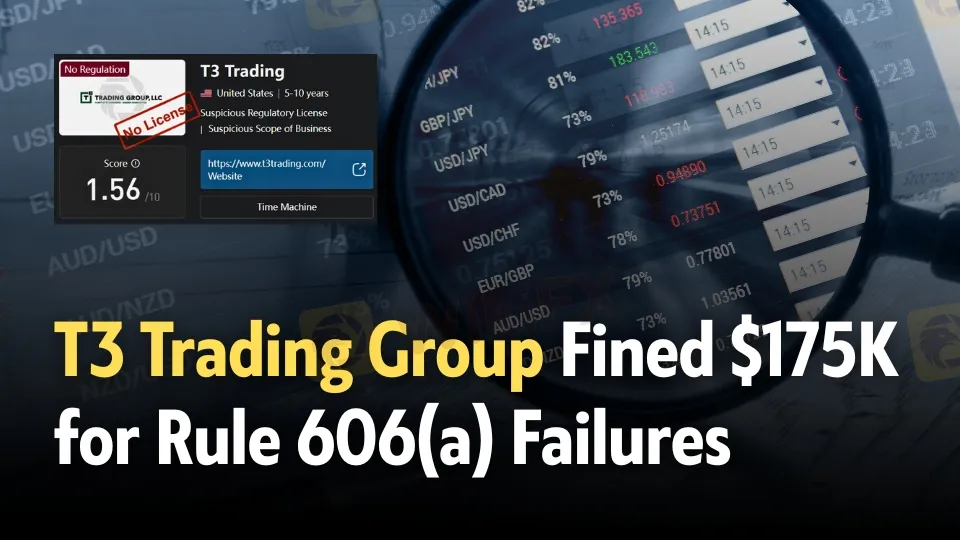
T3 Trading Group, LLC agreed to a $175,000 settlement and a censure after regulators found the firm failed for multiple years to properly publish quarterly customer order handling reports required by Regulation NMS Rule 606(a), and did not maintain a supervisory system reasonably designed to ensure compliance, according to regulatory materials and firm records.
 Contents
What FINRA Found
- Regulators determined the broker-dealer did not publish any Rule 606(a) quarterly order handling reports for a period and later issued reports with little or none of the mandated routing and order-type information, contravening federal disclosure requirements designed to inform customers about order routing practices and potential conflicts of interest.
- The failures were paired with supervisory gaps, as the firm lacked written supervisory procedures and systems reasonably designed to achieve compliance with Rule 606(a), implicating FINRAs core supervision rule framework.
Regulatory Basis and Why Rule 606(a) Matters
- Rule 606(a) of Regulation NMS requires broker-dealers to publish quarterly public reports detailing how they handle customer orders in NMS stocks and listed options, including top routing venues and the percentages across market, marketable limit, non-marketable limit, and other order types, to help investors evaluate order handling quality and conflicts such as payment for order flow.
- FINRA and SEC guidance emphasize accurate, properly formatted quarterly routing reports, clear disclosure of material relationships, and effective supervisory systems, including when a firm adopts by reference a clearing brokers report.

Sanctions and Undertaking
- T3 Trading Group was censured and fined $175,000 and consented to a Corrective Action Undertaking to remediate the reporting and supervisory deficiencies, according to enforcement and related regulatory materials.
Firm Background and Business Model
- T3 Trading Group is a registered broker-dealer and FINRA Member Firm. Firm records indicate membership with FINRA since October 2019 and a focus on proprietary and day trading in exchange-listed equities and equity options, with public materials also describing customer-facing operations.
Context: Industry Expectations on 606 Compliance
- SEC staff and FINRA have repeatedly flagged common pitfalls in Rule 606 programs, including failing to publish required reports, misidentifying venues, inaccurate order-type classifications, incomplete disclosure of payment for order flow, and inadequate supervisory controls—issues regulators expect firms to address through documented procedures and testing.
Practical Takeaways for Broker-Dealers
- Maintain and periodically test a supervisory system (and WSPs) specifically addressing Rule 606(a) public reports, including formatting, venue identification, order-type categorization, and disclosure of material relationships such as payment for order flow.
- If adopting a clearing brokers 606 report by reference, implement controls to verify accuracy and ensure the approach conforms to SEC guidance.
- Preserve the required retention period, promptly remediate exceptions, and certify corrective actions where required by an AWC or exchange order.
Expert View
As a compliance practitioner with experience implementing Regulation NMS reporting programs, a durable 606(a) framework rests on data lineage mapping from order management through report generation, independent QA of venue and order-type logic, and governance that ties exceptions to a documented remediation workflow—controls squarely aligned with SEC and FINRA expectations evidenced in recent guidance and actions.

Disclaimer:
The views in this article only represent the author's personal views, and do not constitute investment advice on this platform. This platform does not guarantee the accuracy, completeness and timeliness of the information in the article, and will not be liable for any loss caused by the use of or reliance on the information in the article.