


FOMC Minutes Today: 3 USD and Gold Scenarios Traders Should Prepare For
The Fed releases the July FOMC minutes on 19 August 2026. Here are three USD and gold scenarios, confirmation signals, and a practical risk checklist for traders.
Original

简体中文
繁體中文
English
Pусский
日本語
ภาษาไทย
Tiếng Việt
Bahasa Indonesia
Español
हिन्दी
Filippiiniläinen
Français
Deutsch
Português
Türkçe
한국어
العربية
اردو




Abstract:Finally, the day (September 22, 2025) has arrived that India has been waiting for, as prices of essential products and services are set to be cheaper. The reason is that the reduced Goods and Services Tax (GST) rates will take effect on as many as 375 items starting today (The first day of Navratri, this year). This is part of the government’s announcement from a month ago regarding the GST reforms aimed at boosting economic growth.

Finally, the day (September 22, 2025) has arrived that India has been waiting for, as prices of essential products and services are set to be cheaper. The reason is that the reduced Goods and Services Tax (GST) rates will take effect on as many as 375 items starting today (The first day of Navratri, this year). This is part of the governments announcement from a month ago regarding the GST reforms aimed at boosting economic growth.
The GST Council, comprising Centre and States, has announced reduced tax rates on goods and services from September 22 for consumers. Several consumption products such as butter, paneer, ghee, ketchup, namkeen, coffee, dry fruits, ice creams, and aspirational goods such as AC, washing machines and television have become cheaper. Several FMCG companies have already announced price reductions amid GST rationalization.
The government has further reduced GST rates on several drugs and formulations, along with medical devices such as glucometers and diagnostic kits, to 5%. As a result, the cost of medicine has reduced substantially for the common man. Pharmaceutical companies have already been told to make MRP revisions and sell medicines at a lower rate after considering the GST cut benefits. Further, the GST on cement has been slashed from 28% to 18%, benefitting home builders.
The GST rate cut will, however, benefit automobile buyers the most as the tax rates for them have been reduced. While the tax rates for small cars have been reduced to 18%, the one for big cars now stands at a lower rate of 28%. In view of GST rate cuts, several automobile companies have announced price reductions.
On the other hand, the GST rate on beauty and physical well-being services, such as salons, health clubs, fitness centres, barbers, yoga, has fallen to 18% with Input Tax Credit (ITC), to 5% without tax credit. Additionally, daily use products such as toilet soap bars, toothbrush, toothpaste, shampoos and hair oil will see a reduced tax rate of 5% from 12/18%. Other daily use products, such as face powder, talcum powder, after-shave lotion, and shaving cream, will also see a reduced rate of 5% from 18%.
From September 22, 2025, GST will act as a two-tier structure containing a majority of goods and services within a tax slab of 5% and 18%. Ultra luxury items will, however, attract a tax rate of 40%. At the same time, tobacco and related products will continue to fall under the 28% plus cess category.
Finance Minister Nirmala Sitharaman earlier said that the GST reforms will add INR 2 lakh crore to the economy with more cash in hand to the people of India.
Presently, GST is levied in four slabs - 5%, 12%, 18% and 28%. A compensation cess is further imposed on luxury items and demerit or sin goods. With the announced reforms, approximately 99% of the goods under the 12% GST rate have shifted to 5%. At the same time, 90% of items falling under the 28% tax bracket have now been transitioned to 18%.
If you want insightful forex updates on your fingertips? Join WikiFX Masterminds.
Just a few steps, and you are part of the community.
1. Scan the QR code placed right at the bottom.
2. Download the WikiFX Pro app.
3. Afterward, tap the ‘Scan’ icon placed at the top right corner
4. Scan the code again.
5. Congratulations on joining the community.

Disclaimer:
The views in this article only represent the author's personal views, and do not constitute investment advice on this platform. This platform does not guarantee the accuracy, completeness and timeliness of the information in the article, and will not be liable for any loss caused by the use of or reliance on the information in the article.

The Fed releases the July FOMC minutes on 19 August 2026. Here are three USD and gold scenarios, confirmation signals, and a practical risk checklist for traders.
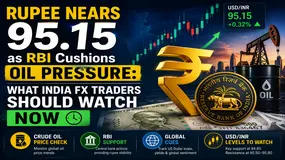
India's rupee is expected to open near 95.14-95.16 per US dollar after closing at 95.2075 on Friday, while Brent crude was quoted at $84.50 and RBI market presence supported the currency. This report separates a reported market intervention from a fixed exchange-rate target, explains why oil, US employment data and Federal Reserve expectations matter, and gives a practical risk checklist for forex trading India. It also explains why volatility is not a reason to trust unverified online forex trading platforms.

The Reserve Bank of India has appointed Monisha Chakraborty as Executive Director with effect from 3 August 2026; she will oversee the Foreign Exchange Department and the Financial Markets Regulation Department. Chakraborty is a career central banker with over three decades of experience in Supervision, Foreign Exchange, and Government and Bank Accounts, and previously served as Banking Ombudsman. This report explains the significance of the new RBI Executive Director appointment for forex regulation India, the scope of the Foreign Exchange Department and the Financial Markets Regulation Department, and what authorised persons, banks, and forex market participants should monitor as the new ED takes charge.
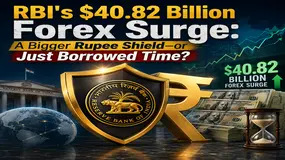
RBI's concessional forex swap facility had mobilised $40.82 billion by 31 July 2026, with FCNR(B) deposits providing $36.725 billion of the total. This India-focused analysis separates confirmed inflows from the $80–85 billion SBI Research projection, compares the 2026 programme with the 2013 FCNR(B) window, and explains what the numbers can—and cannot—do for the Indian rupee. It also shows how banks, NRI depositors, importers, exporters and institutional investors may be affected, while highlighting the oil, dollar, maturity and hedging risks that still matter for USD/INR and forex trading in India.
WikiFXWikiFXWikiFXWikiFXWikiFXWikiFXWikiFXWikiFXWikiFXWikiFX