Abstract:CONSOB orders the blocking of five unauthorized investment websites in Italy as part of its ongoing effort to curb financial fraud and protect investors.
 Contents
CONSOB Blocks Unauthorized Investment Platforms
Italys financial regulator, the Companies and Exchange Commission (CONSOB), has issued new blocking orders against five unauthorized investment websites operating illegally within the country. The move strengthens Italys ongoing crackdown on unlicensed trading platforms and fraudulent financial services.
According to CONSOB, four of the websites offered illegal investment and trading services, while one promoted a fake trading platform that misused the image of Italian officials and energy companies, including that of President Sergio Mattarella.
Websites Ordered to Be Blocked
The newly blocked domains include:
- Freetradeeuropa.com — and its related platforms, including client and web portals under platform-trade247.com.
- Safecapinv.com — along with its client access page.
- Bosonalfa-ai.com — and associated trading portal at tradingfxapp.me.
- GlobalMarketsIC (glblmrktsic.com) — as well as linked advertising pages such as il-petrolio-italiano.it.
With the latest enforcement actions, CONSOB has now blocked 1,522 websites since receiving such powers in July 2019 under the ‘Growth Decree’ and the ‘Capital Law’. These legal frameworks enable the regulator to take direct action against abusive financial intermediaries operating without authorization.
Regulatory Measures and Compliance
Internet service providers (ISPs) in Italy have begun implementing the blocks. However, CONSOB noted that it may take a few days for the restrictions to become fully effective due to technical deployment timelines.
The authority continues to urge investors to verify the authorization status of all online trading and investment platforms before engaging in any financial transactions. These steps, according to CONSOB, are part of Italys broader effort to ensure financial market integrity and protect retail investors from high-risk or fraudulent schemes.
About CONSOB
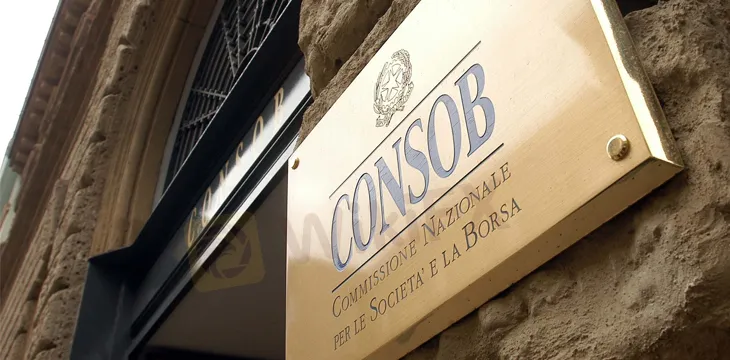
The Commissione Nazionale per le Società e la Borsa (CONSOB) is Italy‘s independent public authority responsible for regulating and overseeing the country’s financial markets. It supervises investment firms, securities markets, and listed companies to promote transparency, investor protection, and fair market practices.