


Institutional FX Volumes Edge Higher in May 2026
Institutional FX trading volumes rose slightly in May 2026 after a weak April, with most major venues reporting modest month-on-month changes.
Original

简体中文
繁體中文
English
Pусский
日本語
ภาษาไทย
Tiếng Việt
Bahasa Indonesia
Español
हिन्दी
Filippiiniläinen
Français
Deutsch
Português
Türkçe
한국어
العربية
اردو




Abstract:From market corrections to digitalisation risks, BaFin’s 2026 risk report sheds light on regulatory priorities impacting forex and cross-border trading.
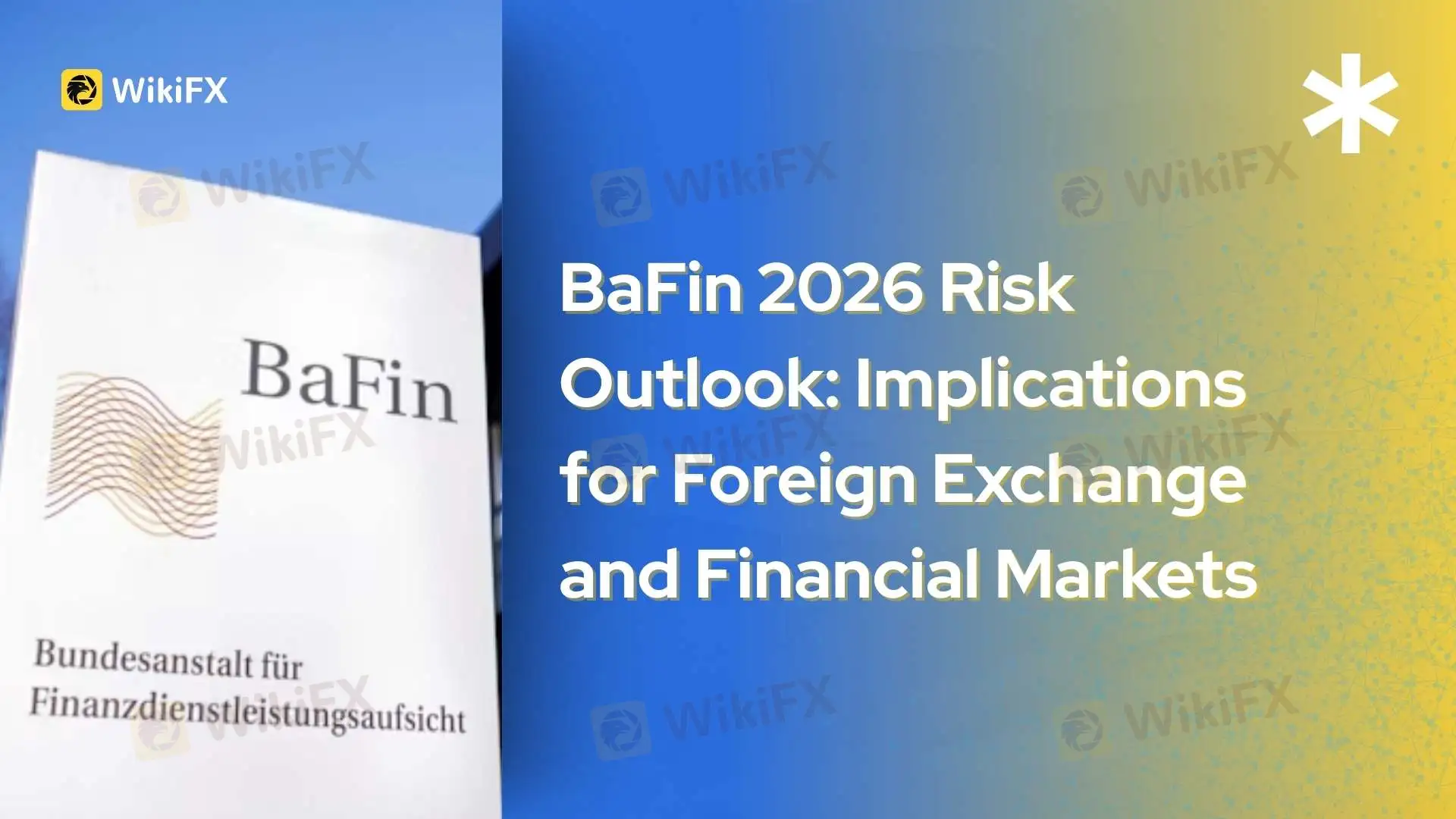
In January 2026, Germany‘s Federal Financial Supervisory Authority (BaFin) published its annual “Risks in BaFin’s Focus” report, outlining key threats facing the financial system in the year ahead. While the report covers a broad spectrum of market, operational, and consumer risks, several identified trends have direct relevance to foreign exchange (forex) markets and those who participate in or rely on them.
One core concern highlighted by BaFin is the ongoing vulnerability of international financial markets, including potential abrupt price adjustments and valuation corrections. Continued high valuations in segments such as equities, coupled with geopolitical tensions and macroeconomic uncertainty, may increase the likelihood of market swings. Such volatility has implications for forex markets, where rapid shifts in asset prices and global capital flows can intensify currency market turbulence.
BaFin specifically monitors potential disruptions in financing markets — including liquidity pressures tied to U.S. dollar funding — which can ripple through cross-border trading and currency dynamics. European financial institutions with extensive exposure to dollar financing may become particularly sensitive to sudden changes in exchange rates or funding conditions.
Another significant theme in the 2026 report is the rising challenge posed by digitalisation and emerging technologies. BaFin notes that the rapid growth of stablecoins, digital assets, and blockchain-based platforms introduces new operational and systemic risks, particularly when these markets intersect with retail trading activity.
In the context of forex trading, the proliferation of crypto-associated products and payment mechanisms can increase exposure to high volatility and technological vulnerabilities. BaFins emphasis on digital risk management — including cyber defence, IT resilience, and compliance with the Digital Operational Resilience Act (DORA) — reflects the growing overlap between traditional currency markets and digital asset ecosystems.
A notable feature of the 2026 risk assessment is the explicit inclusion of consumer-oriented risks, a first for BaFins annual focus report. The regulator points to the growing popularity of certain investment products and finance models — including cryptoasset investments and short-term credit offerings — as areas of concern that may impact individual investors.
From a forex perspective, this signals regulatory attention to the ways retail traders interact with currency-linked products and digital markets. As financial content, recommendations, and promotional messaging spread rapidly through social media and messaging apps, consumers may be exposed to misleading information or ill-understood investment strategies tied to forex or FX-like instruments.
While not unique to the forex domain, BaFin underscored cyber risks and operational vulnerabilities as persistent threats. The growing reliance on complex digital infrastructure — from trading platforms to cloud-based services — heightens the stakes for financial institutions and their clients. In FX trading environments, where high-speed connectivity and automated systems are the norm, robust digital resilience has become essential.
BaFins review stresses the need for consistent incident reporting, enhanced cyber defence measures, and cross-sector coordination — elements that directly influence how forex brokers and related service providers structure their risk frameworks.
Although the BaFin report is rooted in the context of the German financial system, its highlighted risks reflect wider global trends. The combination of fragile market conditions, digital asset growth, evolving consumer behaviour, and mounting cyber threats creates an environment where forex markets — inherently interconnected and sensitive to macro shifts — require enhanced vigilance.
For traders, brokers, and institutional players involved in foreign exchange markets, BaFins 2026 outlook underscores several themes:
By acknowledging these converging factors, market participants can better align their strategies with the regulatory priorities shaping oversight in 2026 and beyond.
WikiFX is a global broker information platform that compiles regulatory disclosures, license records, operational data, and publicly available user feedback to help traders better understand the structure and authorization of brokers across markets. Through aggregated information and risk tracking, WikiFX supports more informed decision-making in dynamic financial environments

Disclaimer:
The views in this article only represent the author's personal views, and do not constitute investment advice on this platform. This platform does not guarantee the accuracy, completeness and timeliness of the information in the article, and will not be liable for any loss caused by the use of or reliance on the information in the article.
Institutional FX trading volumes rose slightly in May 2026 after a weak April, with most major venues reporting modest month-on-month changes.

Regulators are scrutinizing prediction markets as brokers add crypto assets to their platforms. Is innovation outpacing compliance?

Traditional brokers and exchanges are moving into prediction markets, integrating event contracts as a new asset class alongside CFDs, futures, and crypto products.

The CFD industry closed 2025 with over 6.8 million active accounts, defying seasonal slowdowns. What’s driving the growth, and can it last into 2026?
WikiFXWikiFXWikiFXWikiFXWikiFXWikiFXWikiFXWikiFXWikiFXWikiFX